

Table of Contents
- The New Standard in High End Scandinavian Furniture Brands
- Quick Comparison: Leading Nordic Furniture Houses
- Carl Hansen & Son: Danish Modern Icons
- Fritz Hansen: Sculptural Forms and Ergonomic Comfort
- &Tradition: Bridging Heritage and Contemporary Design
- Menu: Refined Minimalism for Modern Interiors
- How to Spot Authentic Danish Modern Furniture
- Sustainable High-End Furniture: What Sets It Apart
- Frequently Asked Questions
Last Updated: September 7, 2026
The global demand for authentic Nordic design has never been higher, yet the market is flooded with mass-produced imitations that borrow the aesthetic without the soul. High end scandinavian furniture brands are defined not by a price tag, but by a commitment to craftsmanship, natural materials, and functional art that outlives trends. At Suemasue's Place, we curate pieces that embody this philosophy.
The New Standard in High End Scandinavian Furniture Brands
The modern interpretation of Scandinavian design is a quiet rebellion against disposable culture, rooted in the mid-century modern movement where form follows function. The best high end scandinavian furniture brands today balance this heritage with contemporary needs, creating pieces that work in a glass penthouse or a rustic mountain retreat with equal grace.
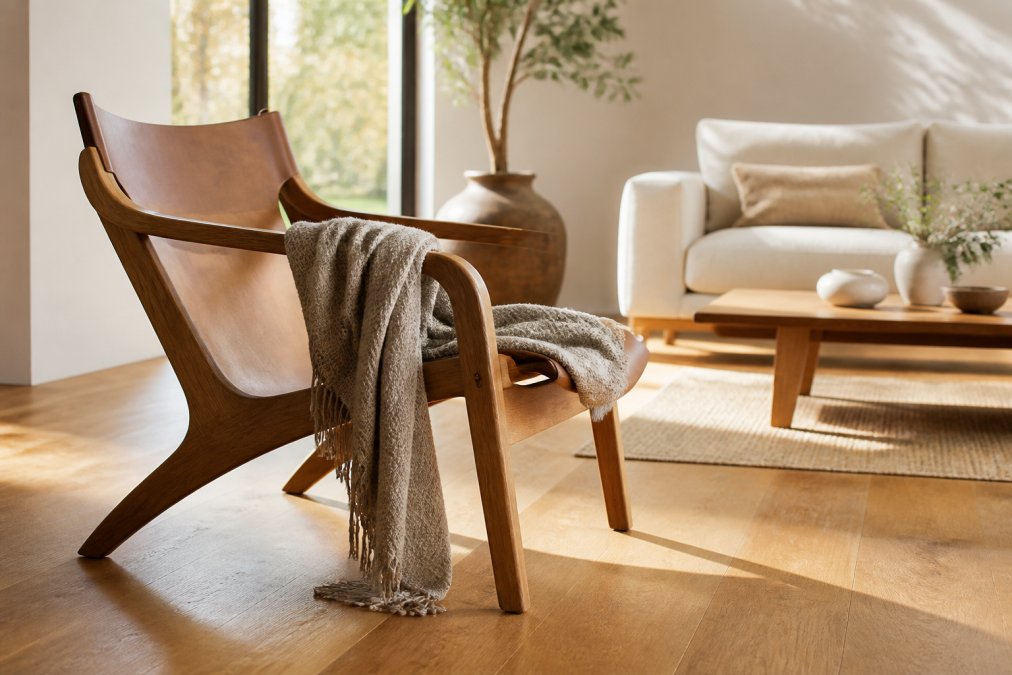
What separates the true houses from the followers is their relationship with materials. They select specific grains and cuts that respond to their climate and designs. This obsession with natural materials and matte finishes gives the furniture its warmth and harmony, a stark contrast to the cold perfection of mass-produced goods.
Quick Comparison: Leading Nordic Furniture Houses
To understand the landscape, it helps to see these houses side by side. Each has a distinct voice within the broader nordic style, from the sculptural forms of one to the refined minimalism of another.
| Brand | Signature Style | Material Focus | Best For |
|---|---|---|---|
| Carl Hansen & Son | Danish modern icons | Solid oak, paper cord | Purists seeking heritage |
| Fritz Hansen | Sculptural ergonomics | Molded veneer, steel | Curves and comfort |
| &Tradition | Heritage remixed | Upholstery, stone | Statement versatility |
| Menu | Refined minimalism | Metal, smoked oak | Understated luxury |
These houses share a foundation of craftsmanship and sustainable design, but they speak different dialects of the same language. Choosing between them comes down to whether you prioritize historical provenance, sculptural innovation, or quiet minimalism.
Carl Hansen & Son: Danish Modern Icons
Carl Hansen & Son is the keeper of the flame for authentic Danish modern furniture. Since 1908, the house has been the primary manufacturer for legendary designers like Hans J. Wegner, producing the iconic Wishbone Chair that remains a benchmark of woodworking excellence (carlhansen.com). Their commitment to craftsmanship is absolute; each chair involves a multi-step process where skilled hands shape the wood, ensuring heirloom quality that justifies the investment.
What you are paying for here is provenance, the original designs, not reinterpretations. When you buy a Carl Hansen piece, you are buying a slice of design history in continuous production for decades. The clean lines and organic shapes anchor a room without overwhelming it.
Fritz Hansen: Sculptural Forms and Ergonomic Comfort
If Carl Hansen represents the linear, structural side of Danish modern, Fritz Hansen represents its softer, more sculptural expression. The house is famous for the Egg and Swan chairs by Arne Jacobsen, pieces that pushed the boundaries of upholstery and molded veneer to create ergonomic forms that cradle the body (fritzhansen.com). This is where minimalism meets supreme physical comfort.
Fritz Hansen distinguishes itself through technological innovation within a traditional framework. Their ability to bend wood and mold materials into fluid, organic shapes was new in the 1950s and remains their signature today, resulting in furniture that functions as sculptural art.
&Tradition: Bridging Heritage and Contemporary Design
&Tradition is the younger house that acts as a bridge between past and present, reviving forgotten mid-century masterpieces while commissioning new works from contemporary designers. This dual approach makes their catalog feel both nostalgic and current.
Their strength lies in upholstery and lighting design, applying the neutral palette and tactile materials of the Scandinavian tradition to silhouettes relevant to today's living spaces. For collectors, &Tradition offers an accessible entry point into the world of high end scandinavian furniture brands without sacrificing material quality or design integrity.
Menu: Refined Minimalism for Modern Interiors
Menu takes the principles of Scandinavian design and distills them into their purest, most contemporary form. Their aesthetic leans heavily on space optimization and architectural design, creating pieces that are often described as "functional art." They favor smoked oak, matte powder-coated metals, and a restrained palette that allows the form of the object to speak for itself.
Where Menu excels is in the details of everyday interaction. A handle is sculpted to fit the hand perfectly; a table leg meets the floor at an angle that enhances stability and visual lightness. This obsession with the micro-experience sets them apart, ideal for clients who prefer a quieter, more intellectual luxury.
How to Spot Authentic Danish Modern Furniture
The market is full of reproductions, so knowing how to verify authenticity is crucial. Authentic Danish modern furniture is defined by specific joinery techniques, material usage, and production methods that are expensive to replicate. Look for exposed joinery where wood meets wood without metal brackets.
The Joinery Test
The most reliable indicator of authenticity is how the piece is assembled. Genuine mid-century Danish pieces use techniques like finger joints, dowel joints, and mortise-and-tenon connections. These are visible at stress points, where the leg meets the seat rail or where the armrest joins the backrest. If you see a smooth, continuous surface at these junctions, the piece is likely using a hidden metal bracket or glue block, a shortcut common in reproductions. Run your hand along the underside of a seat rail; authentic pieces often show slight tool marks from the final hand-finishing, while copies have a uniformly sanded, almost plastic-smooth feel.
The Material and Weight Test
Solid wood and quality upholstery make these pieces heavy, signaling structural integrity. But weight alone is not enough. Look at the end grain of exposed wood. Teak, the most common wood in Danish modern furniture, has a distinct, rich golden-brown color with interlocking grain lines (britannica.com). Rosewood (Dalbergia) is heavier and darker with a striking, almost striped figure. If a piece labeled as teak is uniformly pale or has a greyish tint, it is likely a different, cheaper wood that has been stained. For upholstered pieces, authentic Danish modern chairs use high-resilience foam wrapped in horsehair or cotton wadding. Press firmly on the seat; if you feel a hard, flat foam core immediately beneath the fabric, it is a modern replacement. Authentic pieces have a layered, slightly springy give.
The Maker's Mark and Provenance Trail
Reputable houses like Carl Hansen and Fritz Hansen stamp their pieces with a brand name, designer name, and often a production number. However, these stamps are not always on the bottom. On chairs, look on the underside of the seat frame or the inside of the back leg. On tables, check the underside of the tabletop near the corner or on the apron. The stamp should be crisp and evenly pressed. Blurry or shallow stamps are a red flag for a later copy. Beyond the stamp, ask for provenance. A reputable dealer or seller should be able to provide a receipt from the original purchase or a documented chain of ownership. If buying vintage, ask if the piece has been refinished. A heavy sanding or re-staining can remove the original maker's mark, which is not a sign of inauthenticity but does complicate verification.
The Price-Signal Test
Finally, trust the price signal. If a "Wishbone Chair" is being sold for a fraction of the retail price of a new one, it is either a reproduction or a damaged original. Authentic Danish modern furniture holds its value. A genuine Hans Wegner CH24 from the 1960s in good condition will not be priced like a mass-market knock-off. If the deal seems too good to be true, it almost certainly is. This is where the investment in authenticity pays off, not just in the integrity of the piece, but in its long-term value as a collectible.
Sustainable High-End Furniture: What Sets It Apart
Sustainability in high-end furniture is about creating objects designed to last generations. These brands use responsibly sourced hardwoods, natural fiber upholstery, and finishes that can be repaired rather than replaced, aligning with the Scandinavian concept of "lagom," or balance, where you buy fewer, better things.
The environmental impact of a well-made chair that lasts 50 years is significantly lower than a cheap chair replaced every five years. When you choose a high end scandinavian furniture brand, you participate in a cycle of sustainable design that values resources and craftsmanship over mass production.
The Material Provenance Standard
What separates genuine sustainability from greenwashing is traceability. What separates genuine sustainability from greenwashing is traceability. When a brand can name the specific forest or region where their wood originates, that is a concrete signal of sustainable sourcing. If a brand only says "sustainably sourced" without naming a certification or a region, treat that as a marketing phrase, not a fact.
Repairability as a Design Principle
Sustainability in this niche is not just about the raw material; it is about the product's end-of-life plan. The most sustainable pieces are those that can be repaired, not discarded. This is where the construction methods matter. A chair with a woven paper cord seat can be re-woven when the cord wears out. A sofa may use removable, replaceable cushion covers and foam cores that can be swapped out without discarding the frame. Compare this to mass-market furniture where the upholstery is glued and stapled to the frame, making repair economically unviable. When you invest in a high-end piece, ask the retailer or manufacturer: "Can this be re-upholstered? Can the seat be re-woven? Is the finish repairable?" If the answer is yes, you are buying a piece designed for a 50-year lifecycle, not a 5-year one.
The Carbon and Waste Calculus
A less visible but equally important factor is production waste. High-end manufacturing uses solid wood and veneers more efficiently, with less off-cut waste than cheaper brands using particleboard wrapped in a wood-grain print. High-end brands also use natural oil and soap finishes, which are water-based and low in VOCs. These finishes allow the wood to breathe and can be reapplied locally, on a scratched tabletop, for example, without sanding the entire piece, a sustainability feature mass-market lacquers do not offer.
The Nordic Regulatory Context
The Nordic countries have some of the strictest environmental regulations in the world, shaping their furniture industry. The regulatory environment in these regions pushes manufacturers toward cleaner production methods. This is a structural advantage that high end scandinavian furniture brands may have over manufacturers in regions with weaker oversight.
Frequently Asked Questions
What are the defining characteristics of high-end Scandinavian furniture?
High-end Scandinavian furniture is defined by clean lines, organic shapes, and a neutral color palette rooted in nature. The true markers of quality are visible in the materials and joinery: solid oak, beech, and walnut paired with full-grain leather or wool textiles. Pieces are built with a timeless aesthetic and heirloom quality in mind. Look for honest construction, matte finishes, and a functional purpose. The best brands balance minimalism with warmth and harmony, creating sculptural forms that serve daily life.
How do I distinguish authentic Scandinavian luxury furniture from mass-market replicas?
Authentic Danish modern furniture and other Scandinavian originals carry clear provenance. Check for a manufacturer's stamp, a serial number, or a certificate of authenticity from the brand. Examine the joinery: dovetail joints and visible, precise wood connections signal craftsmanship. High-end pieces use solid hardwoods and natural materials, not veneers or printed grain. The weight and balance of a chair or table should feel substantial. When in doubt, buy from authorized retailers or the brand's own showroom to guarantee authenticity and access to care resources.
What are some famous Scandinavian furniture designers I should know?
The reputation of high end Scandinavian furniture brands rests on a few iconic names. Hans Wegner and Borge Mogensen defined Danish modern with chairs that blend ergonomics and sculptural beauty. Arne Jacobsen contributed the Series 7 and Egg chairs, still in production today. Finnish designer Alvar Aalto brought bent plywood to the world. For a contemporary perspective, look at Space Copenhagen, who designs for &Tradition and Fritz Hansen. Knowing these designers helps you identify pieces with lasting design value and potential investment appeal.
Is high-end Scandinavian furniture worth the investment compared to entry-level pieces?
For many buyers, yes. The price difference reflects more than a logo. High-end manufacturers license original designs, meaning you pay for the designer's estate and the right to produce the piece. Materials are selected for longevity, such as kiln-dried hardwood and aniline leather that develops a rich patina. Construction methods allow for repair rather than replacement. A well-cared-for piece can serve for decades and hold resale value. Entry-level furniture may mimic the look, but it rarely survives a move or daily use with the same integrity.
How do I care for and maintain my Scandinavian furniture collection?
Care routines vary by material, but a few rules apply. Dust wood weekly with a soft, dry cloth; avoid silicone-based polishes that build up over time. Use coasters and felt pads to prevent scratches and water rings. For leather, clean with a damp cloth and condition twice a year to prevent drying. Wool textiles benefit from regular vacuuming and professional cleaning only when needed. Keep pieces out of direct sunlight to prevent fading. With this simple maintenance, your furniture will age gracefully and maintain its warmth and harmony.