

Table of Contents
- What Makes a Furniture Piece Truly Timeless
- Durable Furniture Materials That Age Beautifully
- What to Look for in High End Scandinavian Furniture Brands
- How to Mix Furniture Styles Without Looking Matchy-Matchy
- Spatial Planning: Choosing Pieces That Fit Your Home Long-Term
- Maintenance, Restoration, and the Circular Economy
- Timeless Furniture on a Thoughtful Budget
- Conclusion
- Frequently Asked Questions
Last Updated: September 19, 2026
What Makes a Furniture Piece Truly Timeless
Learning how to choose timeless furniture pieces starts with one idea: buy for the next twenty years, not the next two. At Suemasue's Place, we look at three things before anything else. Silhouette, material, and scale decide whether a piece still looks right a decade from now.
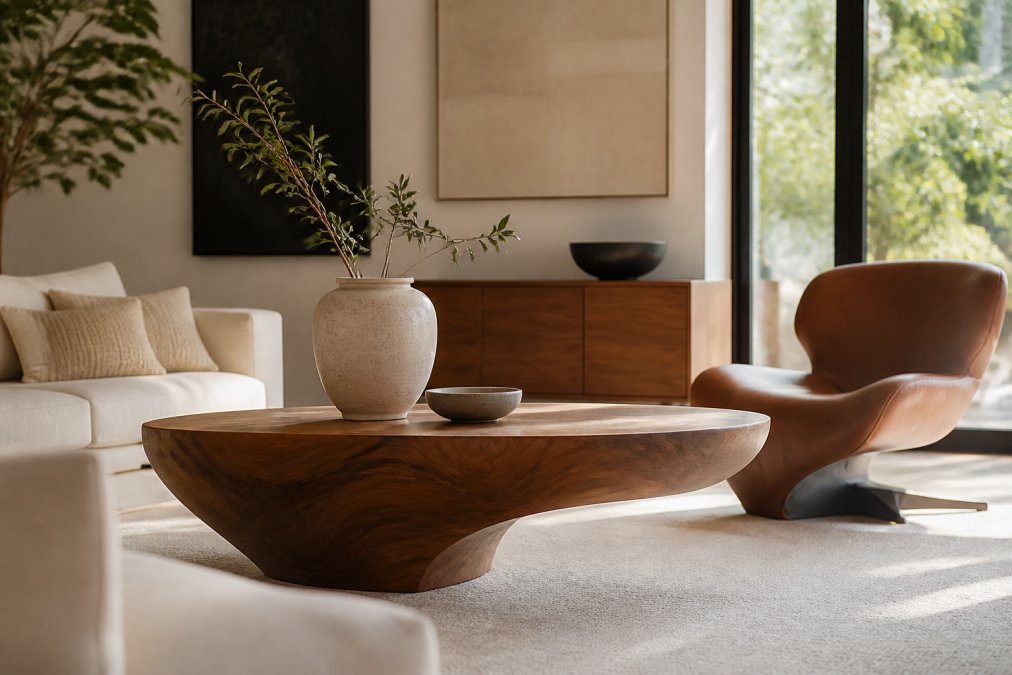
Trends fade fast.
The Three Tests: Silhouette, Material, and Scale
Run every piece through these three tests before you buy:
- Silhouette: Does the shape read clearly from across the room? Clean lines and a strong silhouette never date.
- Material: Is it solid wood, stone, leather, or ceramic? Natural finishes age with grace. Laminate and veneer chip.
- Scale: Does it fit your actual room, not the showroom? Bad proportions ruin good design.
Durable Furniture Materials That Age Beautifully
Material composition decides how a piece looks in ten years. The Forest Stewardship Council guidance on sustainable wood is a useful starting point for checking where wood actually comes from.
Here's what holds up:
- Solid wood: Walnut, oak, and ash develop a rich patina over time.
- Natural stone: Travertine and marble wear into character, not damage.
- Full-grain leather: Softens and darkens beautifully with use.
- Ceramic and stoneware: Chips aside, these hold their finish for decades.
Reading Joinery and Structural Integrity
Joinery is the clearest signal of quality. Look for dovetail joints in drawers and mortise-and-tenon joints in frames. These hold for generations.
What to Look for in High End Scandinavian Furniture Brands
High end Scandinavian furniture brands share a recognizable DNA: honest materials, restrained forms, and joinery you can inspect with your own hands. The Nordic approach favors functional aesthetics over decoration, a chair should work before it should impress. But "high end" is a marketing phrase, not a specification. Here is how to tell the real thing from a label.
The Five-Point Scandinavian Quality Check
Run any candidate piece through these tests before you commit:
- Frame material and grade. Look for solid oak, walnut, ash, or beech, not veneer over particleboard. Ask whether the wood is FSC-certified; the Forest Stewardship Council guidance on sustainable wood is a useful reference. Kiln-dried hardwood resists warping; air-dried or green wood does not.
- Joinery you can see. Mortise-and-tenon at frame corners, doweled or dominoed rails, and dovetailed drawers are the signals. Staples, screws driven into end grain, and glue-only butt joints are the warnings.
- Finish chemistry. Danish oil, hardwax oil, and soap-treated finishes can be refreshed at home. Catalyzed lacquers and thick polyurethane look glossy new but are difficult to repair and often chip in sheets.
- Upholstery construction. Eight-way hand-tied springs, webbing, or high-resilience foam over a solid frame all last. Stapled cardboard and loose fiberfill do not. Removable covers in wool, linen, or full-grain leather are a longevity advantage because they can be cleaned or replaced.
- Proportions and ergonomics. Scandinavian design is not minimal for its own sake, it is scaled to the human body. Seat height, arm height, and back angle should feel obvious the moment you sit down.
Brand Archetypes, Not Brand Names
- The sculptural lounge chair, a curved shell, splayed legs, and a single material story (leather, wool, or bent plywood).
- The trestle or pedestal table, a solid top on a structural base, designed to be repaired rather than replaced.
- The storage sideboard, clean front, tapered legs, and drawers that glide on wood runners or high-quality metal slides.
- The paper or linen pendant, a soft, diffused light source that reads as architecture, not decoration.
How to Mix Furniture Styles Without Looking Matchy-Matchy
The trick to mixing furniture styles is contrast in form, harmony in tone. Match your palette, not your periods. A walnut table and a leather chair from different eras can sit together perfectly, but only if the underlying rules are respected. Most failed mixes break one of four rules: scale, color temperature, material repetition, or visual weight.

The Four Rules of a Successful Mix
1. Anchor the palette first. Choose one neutral base (warm white, greige, oatmeal, or soft charcoal) and one secondary tone (walnut, blackened steel, or aged brass). Every piece you add must relate to one of those two. This is what stops a room from reading as a flea-market pile.
A Practical Mixing Formula
A reliable starting ratio for a living room is:
- 60% foundation, the sofa, rug, and largest case piece, in your neutral base.
- 30% character, two or three pieces from different eras or silhouettes, in your secondary tone.
- 10% accent, one sculptural or textural object (ceramic, stone, or a single vintage find).
This ratio keeps the room coherent while leaving room for personality. It also makes future additions easier: you always know which slot a new piece is filling.
Common Mixing Mistakes and How to Fix Them
- Era clash without a bridge. A Victorian armchair next to a glass-and-chrome console needs a bridge, a rug, a repeated wood tone, or a shared textile, or it reads as two rooms in one.
- Color temperature drift. Warm woods next to cool grays can make both look off. Pick a temperature and stay inside it.
- Scale mismatch. A delicate antique side table next to an oversized modern sectional will look lost. Match visual weight, not literal size.
- Too many statement pieces. One hero per sightline. Everything else supports it.
When to Break the Rules
Rules exist to keep a room coherent, not to make it predictable. A single deliberate clash, a rustic piece in a minimal room, or a bright color in a neutral scheme, can be the most memorable element in a space. The test is whether the piece still relates to the palette or the material story. If it does, the clash reads as intention.
Spatial Planning: Choosing Pieces That Fit Your Home Long-Term
Measure your room before you fall in love with a piece online. Scale is where most furniture mistakes happen. A sofa that fits a showroom can swallow a small living room.
Consider these long-term factors:
- Doorways and stairs: Will the piece physically fit inside?
- Traffic paths: Leave at least 90 cm for walking.
- Multi-use rooms: Choose pieces that adapt as your needs change.
Maintenance, Restoration, and the Circular Economy
Maintenance is the quiet secret behind timeless furniture. A piece you care for lasts decades longer than one you ignore. This is also where sustainable design and the circular economy meet.
Simple habits keep pieces alive:
- Wood: Dust weekly, oil or wax once or twice a year.
- Leather: Condition every six months to prevent cracking.
- Stone: Seal annually and wipe spills quickly.
- Upholstery: Rotate cushions and vacuum seams monthly.
Timeless Furniture on a Thoughtful Budget
You can build a timeless home without a limitless budget. The strategy is simple: buy fewer, better pieces and spread the cost over years.
Where to focus your money:
- Anchor pieces: Spend on the sofa, dining table, and bed.
- Skip the trend items: Save on accessories you'll swap anyway.
- Buy secondhand: Quality vintage often costs less than new fast furniture.
- Add slowly: One great piece a year beats five cheap ones.
| Goal | Smart Move | Why It Works |
|---|---|---|
| Save money | Buy fewer anchor pieces | Cost spreads over decades |
| Avoid trends | Choose neutral palette | Stays current longer |
| Fill a room | Add one piece per year | No rushed, wrong buys |
| Go sustainable | Restore instead of replace | Less waste, more character |
Conclusion
Choosing furniture that lasts takes patience, but the payoff is a home that feels settled and personal for years. Suemasue's Place curates timeless pieces built around natural materials and refined craftsmanship. Our collection includes sculptural seating, stone lighting, and organic accents that complement modern, Japandi, and Scandinavian interiors. Start with one anchor piece and build a room you'll love for decades. Shop the Collection and bring extraordinary living into your home.

Frequently Asked Questions
What is the 2/3 rule in furniture placement?
The 2/3 rule suggests that a piece of furniture should occupy roughly two-thirds of the wall or space it sits against, leaving one-third as breathing room. A sofa spanning two-thirds of a wall feels anchored without crowding the room. This proportion trick works for rugs, artwork, and lighting too. When choosing timeless furniture, apply the rule to confirm a piece suits your actual room scale, not just the showroom.
What are the best materials for long-lasting, timeless furniture?
Solid wood, particularly walnut, oak, and ash, remains the benchmark for durable furniture materials because it can be sanded and refinished for decades. Full-grain leather develops a patina that improves with age. Stone and ceramic hold their finish indefinitely. Avoid particleboard wrapped in veneer, which cannot be repaired once it swells or chips. Check that joinery uses mortise-and-tenon or dovetail construction rather than staples and glue alone.
How do you distinguish between a passing trend and a timeless design?
Ask whether the piece relies on a single seasonal detail, such as a specific shade of green or an exaggerated curve, or on proportion and material quality. Timeless furniture earns its place through silhouette, structural integrity, and honest materials. A quick test: imagine the piece in a room photographed twenty years ago and again twenty years from now. If it fits both, it is likely trend-proof.
How can you mix modern and traditional furniture for a timeless look?
Anchor the room with one classic archetype, such as a wingback or Chesterfield, then layer in contemporary pieces with quieter lines. Keep a consistent neutral palette and repeat one material, like walnut or travertine, across both eras. This is how to mix furniture styles without the space feeling like a showroom. Limit yourself to two or three dominant materials and let texture and scale do the balancing work.