

Table of Contents
- Step 1: Set Up a Simple Maintenance Kit for Japandi Furniture
- Step 2: Dust and Clean Light Oak Furniture Without Damaging the Grain
- Step 3: Choose the Best Wood Oils for Japandi Furniture
- Step 4: Preventing Scratches on Minimalist Furniture in High-Traffic Rooms
- Step 5: Protect Wood and Natural Stone from Sunlight and Moisture
- Step 6: Seasonal Maintenance Checklist for Japandi Furniture
- Frequently Asked Questions
Last Updated: September 20, 2026
Step 1: Set Up a Simple Maintenance Kit for Japandi Furniture
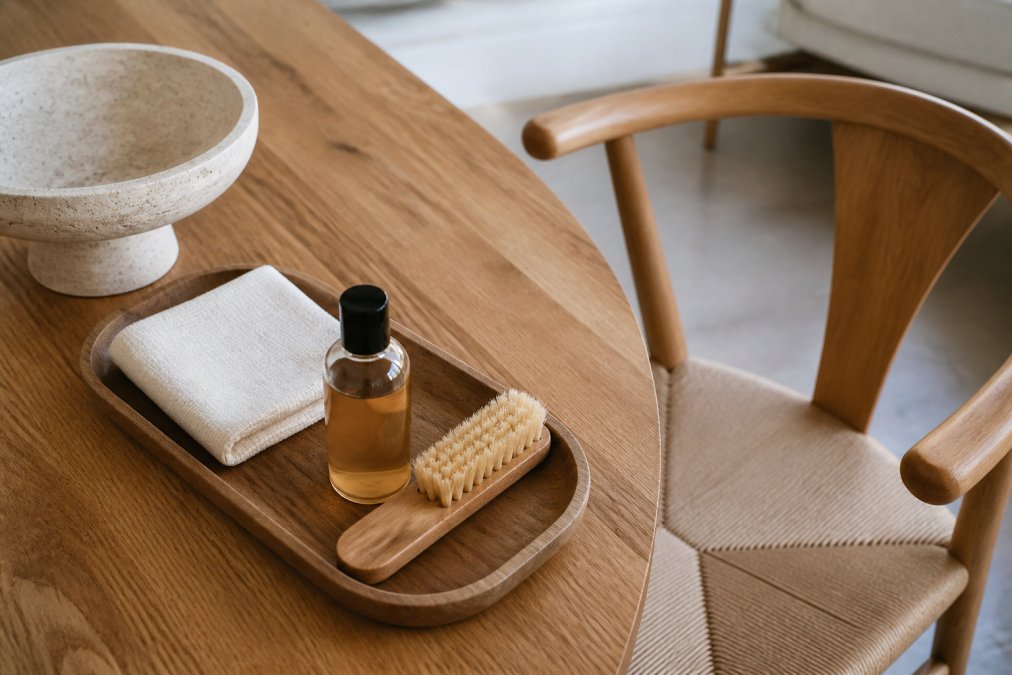
Maintaining japandi furniture starts with the right tools, not a long list of products. A simple kit of four or five items handles almost every cleaning and care task these pieces need.
You do not need a cabinet full of specialty sprays. In fact, too many products cause more harm than good on natural wood and stone.
Here is what to keep on hand:
- A soft microfiber cloth for dusting
- A second microfiber cloth for drying
- A gentle pH-neutral soap
- A natural bristle brush for crevices
- A quality wood oil for periodic conditioning
Store these together in one tray or basket. That way, you actually use them instead of letting dust build up for months.
Step 2: Dust and Clean Light Oak Furniture Without Damaging the Grain
Dust light oak furniture every week with a dry microfiber cloth. For deeper cleaning, wring out a cloth in mild soapy water until it is barely damp, wipe with the grain, then dry right away.
Water is the enemy here, not dirt. A wet cloth left sitting on oak will raise the grain and leave permanent marks.
Follow this order:
- Dust the whole surface first with a dry cloth
- Mix a few drops of pH-neutral soap in warm water
- Wring the cloth until it feels almost dry
- Wipe in the direction of the wood grain
- Buff dry with a second cloth immediately
For grooves and edges, use a soft natural bristle brush instead of a cloth. It lifts dust without scratching.
The Wood Furniture Care guidance from the Forest Products Laboratory confirms that excess moisture is the leading cause of swelling and finish damage in solid wood pieces.
Step 3: Choose the Best Wood Oils for Japandi Furniture
The best wood oils for Japandi furniture are penetrating oils like linseed, tung, and walnut oil. They soak into the grain, feed the wood, and leave a matte finish that matches the Japandi look. But the choice between them is not just about finish, it is about how much maintenance you are willing to do, how the piece is used, and how the oil ages.
Avoid glossy polyurethane topcoats and varnishes. They sit on top of the wood and create a plastic sheen that fights the whole aesthetic. More importantly, they cannot be spot-repaired. Once a varnished surface scratches, you must sand the entire piece back to bare wood. Oiled wood, by contrast, can be repaired in minutes with a dab of oil and a cloth.
Here is how the main options compare in real-world Japandi use:
| Oil Type | Finish | Best For | Reapply | Key Trade-off |
|---|---|---|---|---|
| Raw linseed oil | Matte, warm | Oak, ash, walnut | Every 6-12 months | Slowest to cure (days, not hours); can yellow over time |
| Boiled linseed oil | Satin, slightly darker | High-use tables, chairs | Every 6-12 months | Contains metallic dryers; not food-safe |
| Pure tung oil | Satin, water-resistant | Dining tables, kitchen pieces | Every 6-12 months | Expensive; needs 3-5 coats for full protection |
| Walnut oil | Soft matte | Light woods, food-safe surfaces | Every 3-6 months | Least durable; best for decorative pieces, not daily-use tables |
| Hard wax oil | Low sheen | All-round protection | Every 12 months | Not a pure oil; contains wax, so it builds a film over time |
Apply a thin coat with a lint-free cloth, let it soak in for 15-20 minutes, then wipe off the excess. Two thin coats beat one thick coat every time.
Step 4: Preventing Scratches on Minimalist Furniture in High-Traffic Rooms
Preventing scratches on minimalist furniture comes down to three habits: felt pads, coasters, and a no-slide rule. Most scratches happen from everyday objects, not accidents.
Simple steps that work:
- Stick felt pads under every chair, vase, and lamp base
- Use coasters for hot drinks and cold glasses
- Lift items instead of dragging them across surfaces
- Keep a small tray under keys, phones, and bowls
- Trim pet claws and add a mat near doorways
Step 5: Protect Wood and Natural Stone from Sunlight and Moisture
Direct sun and standing water cause the most lasting damage to Japandi furniture. Both fade finishes and warp natural materials over time.
How to protect your pieces:
- Move furniture out of direct sun or use sheer curtains
- Rotate decorative objects every few months so fading stays even
- Wipe up spills within a minute, especially on stone
- Use a dehumidifier in damp rooms
- Keep plants on a separate tray, never directly on wood
Step 6: Seasonal Maintenance Checklist for Japandi Furniture
A seasonal routine keeps Japandi furniture in shape without much effort. Four short sessions a year cover everything. But the real value is in the details, what to check, what to fix, and what to use that aligns with the Japandi ethos of natural, non-toxic care.
Spring (deep clean and oil)
- Dust all wood and stone surfaces with a dry microfiber cloth
- Wash linen cushion covers and throws in cold water with a gentle, plant-based detergent; air dry
- Wipe stone pieces with a damp cloth and dry fully
- Inspect wood for dryness, scratches, or water rings
- Re-oil any piece that looks dull or feels dry (spring is ideal, low humidity, open windows)
- Check felt pads and replace worn ones
Summer (sun and moisture protection)
- Move furniture out of direct sun or use sheer curtains
- Rotate decorative objects every few months so fading stays even
- Wipe up spills within a minute, especially on stone
- Check humidity levels; aim for 40-50% indoor humidity
- Vacuum upholstery and linen cushions with a brush attachment
Fall (repair and reseal)
- Address scratches: for light scratches on oiled wood, rub a walnut meat or a drop of walnut oil into the scratch with your finger; for deeper gouges, sand lightly with 220-grit paper, then re-oil
- Remove water rings: place a dry cloth over the ring and press with a warm iron for a few seconds; repeat until the ring lifts
- Reseal stone pieces with a penetrating stone sealer (once a year)
- Check for loose joints or wobbly legs; tighten screws and apply a dab of wood glue if needed
Winter (humidity control)
- Use a humidifier if indoor air is dry; heating systems can drop humidity below 30%
- Keep plants on a separate tray, never directly on wood
- Dust more frequently, dry air means more static and more dust
- Inspect wood for new cracks or splits; small cracks can be filled with wax stick in a matching color
Frequently Asked Questions
Is Japandi furniture high maintenance?
Not at all. Japandi furniture is designed for livable simplicity, so it needs less upkeep than ornate pieces. A quick dust weekly, a damp cloth for spills, and an oil treatment once or twice a year keep wood looking rich. Stone accents like a travertine bowl only need a soft dry cloth. The key is consistency, not effort: five minutes a week prevents most problems.
What are the best wood oils for Japandi furniture?
For light oak and ash, look for clear or white-tinted hardwax oils rather than dark tung or linseed, which can yellow pale grain. A pH-neutral wood soap paired with a natural hardwax oil maintains the matte, organic finish Japandi style is known for. Always test on a hidden area first, and apply thin coats with a lint-free cloth, buffing after 20 minutes.
How do you clean light oak furniture without damaging it?
Start with a dry microfibre cloth to lift dust, then wipe with a cloth barely dampened in pH-neutral wood soap and water. Dry immediately, never let water sit on the surface. Avoid all-purpose sprays, vinegar, and abrasive pads, which strip the matte finish and raise the grain. For sticky marks, a specialist wood cleaner formulated for light timber is safest.
How do you protect natural wood finishes in a Japandi-style home?
Keep furniture out of direct sunlight, as UV rays fade and dry pale timber. Use felt pads under lamps and stone decor, and coasters under drinks. A hardwax oil every six to twelve months replenishes the protective layer. In humid rooms, run a dehumidifier to prevent swelling. Rotating decorative pieces like a travertine candle holder also stops uneven patina forming.
Caring for natural materials takes a little routine, but the payoff is furniture that ages beautifully instead of wearing out. At Suemasue's Place, our collection is built around exactly that idea: refined craftsmanship, natural stone, and pieces made to last. Our travertine décor and curated furnishings bring warmth and quiet elegance to any room. Shop the Collection and find pieces you will care for, and love, for years.