

Table of Contents
- What Makes Artisanal Decor Different from Mass-Produced Pieces
- Building a Modern Artisanal Interior Design Foundation
- How to Mix Handcrafted Home Decor with Modern Furniture
- Styling Statement Pieces in a Living Room
- Texture, Lighting, and Layering for Tactile Depth
- Sourcing Artisanal Decor on a Budget Ethically
- Caring for Handcrafted Materials So They Last
- Frequently Asked Questions
Last Updated: September 14, 2026
What Makes Artisanal Decor Different from Mass-Produced Pieces
Artisanal decor is home décor made by hand in small batches, where a maker shapes raw materials like stone, clay, wood, or natural fiber into a finished piece. The small irregularities left by that human process give a room character a factory mold cannot replicate. This guide from Suemasue's Place covers how to style artisanal decor in a modern home, from color palettes to shelf styling to long-term care.
The hallmarks of authentic artisan-made pieces
Authenticity shows up in details. A genuine handcrafted piece carries slight variations in tone, weight, or surface: wood grain runs differently on every board, stone veining shifts piece to piece, and tool marks may remain visible.
Mass-produced décor repeats the same form with near-perfect consistency, exactly what makes it feel flat in a styled room. Buying artisan-made means buying a small design narrative: one maker, one material, one set of decisions.
Building a Modern Artisanal Interior Design Foundation
Modern artisanal interior design starts with a restrained foundation, then lets handcrafted pieces carry the personality. Keep roughly 70-80% of a room in quiet, neutral basics and reserve the remaining 20-30% for pieces with visible texture, patina, or sculptural form, a ratio that keeps a space curated rather than cluttered.
Start with the shell: walls, floors, and large upholstery in warm neutrals, then layer in artisan-made objects as accents. Coming from a fully mass-produced room, expect the first handcrafted addition to look slightly out of place for a week or two; it settles once a second textured piece balances it.
Color palettes: warm neutrals and earthy tones
Warm neutrals and earthy tones give artisan pieces room to breathe: bone, oatmeal, sand, clay, and soft charcoal rather than cool greys and stark white. Natural stone and wood already carry warmth, so a cool palette makes them look dull.
A workable palette uses three tones: one base, one mid-tone, and one accent pulled from the material itself. If your travertine has beige veining, repeat that beige in a textile or ceramic, repeating a material's own color makes a room read as intentional.
| Palette Layer | Example Tones | Where It Goes |
|---|---|---|
| Base | Bone, oatmeal, soft white | Walls, large upholstery, rugs |
| Mid-tone | Sand, clay, warm grey | Curtains, secondary seating, cabinetry |
| Accent | Travertine beige, walnut, terracotta | Stone décor, wood pieces, cushions |
How to Mix Handcrafted Home Decor with Modern Furniture
Learning how to mix handcrafted home decor with modern furniture comes down to contrast, not matching. Clean-lined modern pieces and textured artisan objects balance each other when proportions and materials differ enough to be intentional: a sleek sofa next to a rough stone bowl reads as designed, while a sleek sofa next to another sleek object reads as a showroom.
Use this approach:
- Anchor the room with two or three modern, low-texture pieces.
- Add one sculptural artisan piece per sightline so the eye lands somewhere.
- Vary scale deliberately: pair a large handcrafted object with small modern ones.
- Repeat one material, such as natural stone, in two or three spots to tie the mix together.
- Leave negative space around your best piece so it can be seen.
The mistake most people make is buying a full matching set, matchy rooms feel staged, not lived-in. A single handcrafted object among pieces you already own usually does more than a coordinated collection.
Styling Statement Pieces in a Living Room
Styling statement pieces in a living room works best when each piece has a clear job and you design around sightlines, not surfaces. A sculptural object can anchor a coffee table, finish a console, or add height to a shelf; the skill is understanding how scale, negative space, and traffic flow interact, especially in smaller living rooms.
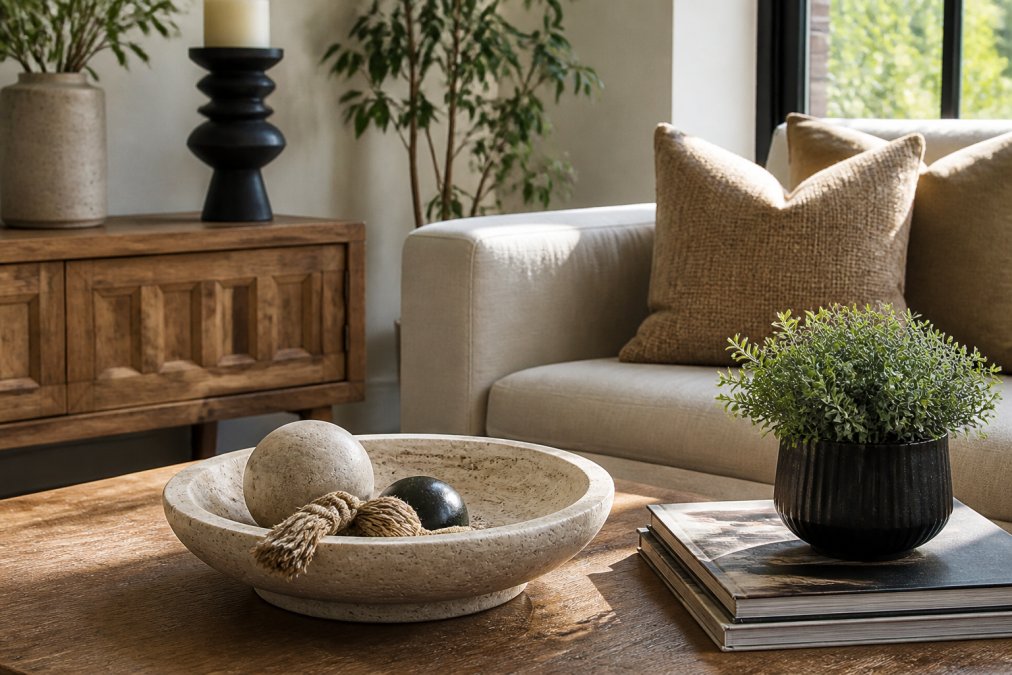
Start by mapping the room's sightlines: stand at each entry point and note where your eye lands first, that spot deserves your strongest piece. In a small living room you may only have one or two clear sightlines, so choose pieces that work from multiple angles. A handcrafted bowl with a curved profile reads differently from the side than from above, making it more versatile than a flat tray.
Shelf, console, and coffee table styling
On shelves, group in odd numbers and vary height: a pair of bookends holding a short stack of books plus one taller object is enough for a single shelf. The Travertine Arch Bookends from Suemasue's Place do this well, they hold books while acting as a sculptural accent, and the natural stone adds weight and warmth. In small spaces, wall-mounted shelves at eye level draw the gaze upward and free up floor area.

On a console, work left to right in a loose triangle: a tray or bowl on one side, a taller object on the other, open space between them. The Siena Travertine Rectangle Tray is built for exactly this, corralling keys, jewelry, or trinkets on an entryway console without looking like storage. In a narrow hallway, choose a console depth of 12 inches or less and keep the tallest object under 18 inches.
On a coffee table, keep it to one or two pieces: a single Travertine Decorative Bowl as a centerpiece, or a Travertine Pedestal Candle Holder for vertical interest. Travertine is a natural stone, so each bowl and holder shows its own veining and pitting, no two surfaces look alike. In a small living room, a round coffee table with a single bowl preserves legroom and visual breathing space better than a crowded rectangular one.
Scaling statement pieces for small living rooms
Small living rooms demand fewer pieces, each working harder. Instead of one statement piece per surface, aim for one per zone, seating area, entry, and window, and let the rest stay quiet. A common mistake is placing a large sculptural object on a small side table, which makes the table look like a pedestal and the object oversized. Better rule: the object's height should not exceed one-third of the surface's width, for a 24-inch-wide side table, keep it under 8 inches tall.
Use vertical space: a tall, narrow handcrafted vase on a floating shelf draws the eye up and makes ceilings feel higher. In a rental where you cannot drill, a leaning ladder shelf holds three or four artisan pieces without damaging walls. Always leave at least 60% of any surface empty, negative space makes a single piece feel intentional.
Texture, Lighting, and Layering for Tactile Depth
Texture and lighting decide whether a room feels flat or alive. Layering materials at different scales, then lighting them from the side, makes a handcrafted surface read as tactile rather than decorative. Texture comes from contrast, smooth against rough, matte against slightly polished, hard stone against soft linen, and light hitting a surface at an angle creates micro-shadows that reveal depth, while direct overhead light washes them away.
A downlight directly overhead flattens a textured surface, while a lamp placed to the side, or daylight raking across a wall, throws small shadows that reveal the surface of stone, wood, and woven fiber. To make a piece noticed, light it from the side at roughly 30 to 45 degrees from the surface plane. Test with a movable lamp: place it at eye level to the side of the object, then slowly lower it until the texture pops.
Layer in this order:
- Base: rug, large upholstery, curtains
- Mid: wood or metal furniture with visible grain
- Top: artisan objects in stone, clay, or natural fiber
- Softeners: linen, wool, or cotton textiles to break up hard surfaces
Maintaining texture: care for stone, wood, and fiber
Textured materials collect dust and oils differently than smooth ones, and ignoring that shortens their life. Natural stone like travertine is porous, spills left sitting can stain, and acidic cleaners etch the surface. Wipe with a soft damp cloth and dry immediately; avoid vinegar, citrus, or ammonia. For wood with visible grain, dust with a dry microfiber cloth weekly and re-oil only when the surface looks dry, not on a fixed schedule, over-oiling attracts dust and can darken the grain unevenly.
Natural fiber textiles like jute, wool, and linen need rotation to avoid sun-fading on one side; spot clean with cool water and air dry flat, since hot water and tumble drying shrink and weaken fibers (Textiles Strategy - Environment). For clay and unglazed ceramic, hand wash and air dry fully before putting away, trapped moisture can cause cracking in dry climates. Simple rule: match the care routine to the material's porosity, the more porous the material, the gentler the cleaner and the faster you dry it.
Layering for small spaces and rental-friendly texture
In small rooms, layering texture vertically beats spreading it across surfaces. A textured wall hanging or tall woven basket adds tactile depth without consuming floor space, and a single chunky knit throw over a smooth sofa adds contrast in one move. For renters, removable wallpaper with a subtle grasscloth or linen texture adds a layer without permanent commitment, and a washable jute rug over existing carpet introduces natural fiber without installation.
Vary scale: one large texture (a woven wall piece), one medium (a stone bowl), and one small (a ceramic cup) in the same sightline. That range keeps the eye moving and prevents any single texture from dominating. Because these pieces are often the ones you touch daily, keep a small care kit, microfiber cloth, soft brush, and pH-neutral stone soap, within reach.
Sourcing Artisanal Decor on a Budget Ethically
You can source genuine artisan-made decor without a luxury budget if you buy fewer, better pieces and verify where they come from. Set one realistic budget for a single statement piece per room rather than spreading the same money across many small items, one well-made object usually does more for a space than five cheap ones.
Where to look:
- Maker markets and craft fairs, where you can meet the person who made the piece
- Estate sales and antique shops for older handcrafted items with real patina
- Direct-from-maker online shops that name the artisan and the material
- Local studios and workshops that sell seconds or samples at lower prices
On the ethical side, ask three questions before buying: who made it, what it is made from, and how it was finished. A seller who cannot answer those questions is a risk. Look for named makers, stated materials, and honest descriptions of imperfections. Fair trade certification bodies publish guidance on what to look for in fair trade sourcing standards, and consumer protection regulators such as the FTC guidance on advertising claims set the baseline for how makers may describe handmade and sustainable goods.
Caring for Handcrafted Materials So They Last
Handcrafted materials last for decades when you match the care routine to the material. Natural stone, wood, clay, and natural fiber each react differently to water, heat, and sunlight, so a single all-purpose cleaner is the wrong tool for most of them.
| Material | Avoid | Do Instead | Frequency |
|---|---|---|---|
| Natural stone (travertine, marble) | Acidic cleaners, vinegar, citrus | Wipe with a soft damp cloth, dry immediately | Weekly |
| Wood (walnut, oak, acacia) | Soaking, direct sun, harsh solvents | Dust with a dry cloth, re-oil occasionally | Monthly |
| Clay and ceramic | Dishwasher for unglazed pieces | Hand wash, air dry fully | As used |
| Natural fiber (linen, wool, jute) | Hot water, tumble drying | Spot clean, air dry, rotate position | Seasonally |
For natural stone, keep drinks and oils off the surface where you can, and blot spills rather than wiping them across, stone is porous, so a spill left sitting can leave a mark. For wood, keep pieces out of direct sun to slow uneven fading, and re-oil only when the surface looks dry.
Frequently Asked Questions
What are the defining characteristics of artisanal decor?
Artisanal decor is defined by handcrafted construction, natural materials, and small-batch production. Look for visible wood grain, stone veining, and subtle irregularities that show a human hand made the piece. Authentic artisanal items often use traditional techniques like block printing or hand-thrown pottery. Unlike mass-produced decor, each piece carries slight variations that give it character, making your home feel curated rather than catalog-bought.
How do you mix artisanal decor with modern furniture without it looking cluttered?
Start with a neutral modern base, like a clean-lined sofa or minimalist shelving, then add two or three handcrafted pieces as focal points. Group items by material or color family to create cohesion. For example, pair travertine bookends with a wood-grain console and keep surrounding surfaces mostly bare. The goal is contrast, not competition: let each artisanal piece breathe so its texture and craftsmanship stand out.
What is the 70/30 rule in interior design and how does it apply to artisanal decor?
The 70/30 rule suggests that 70 percent of a room should follow a dominant style or color, while 30 percent introduces contrast. When styling artisanal decor, let 70 percent of your space lean modern and minimal, then use the remaining 30 percent for handcrafted statement pieces. This balance keeps the room feeling intentional and organic rather than overly curated or matchy-matchy.
How can I incorporate handcrafted pieces without cluttering my space?
Edit ruthlessly. Choose one hero piece per surface, such as a sculptural travertine bowl on a coffee table or a pedestal candle holder on a console. Rotate accessories seasonally instead of displaying everything at once. Keep sightlines clear and leave negative space around each artisanal item so its texture and form read as intentional. Fewer, better pieces always look more sophisticated than a crowded shelf.
Styling a home with handcrafted pieces is less about buying more and more about choosing well and caring for what you choose. At Suemasue's Place, the collection is built around natural materials and refined craftsmanship, so a single travertine bookend, bowl, or tray can carry a whole surface. Browse the collection to find pieces that complement organic modern, Japandi, and contemporary interiors, and build a home that feels uniquely yours.