

Table of Contents
- The Longevity Question: Why Japandi Style Endures Beyond Trends
- Japandi Interior Design Principles: The Framework That Keeps It Timeless
- Japandi vs Scandi Design: What Separates Them and Why It Matters
- Wabi-Sabi Home Decor Ideas: Adding Soul and Imperfection to a Timeless Look
- Investment Value and Longevity: How to Choose Pieces That Last
- Budget-Friendly Ways to Embrace Japandi Style Without Compromising Quality
- The Psychological Benefits of Japandi: Calm, Clarity, and Intentional Living
- Conclusion: Why Japandi Style Is More Than a Passing Trend
- Frequently Asked Questions
Last Updated: September 26, 2026
The Longevity Question: Why Japandi Style Endures Beyond Trends
Is Japandi style just trendy? No. Japandi style is a design philosophy rooted in centuries-old Japanese and Scandinavian traditions, which is precisely why it outlasts fast-moving interior fads. At Suemasue's Place, we see buyers asking this exact question before committing to a large purchase, and the answer sits in the style's origins rather than its Instagram presence.
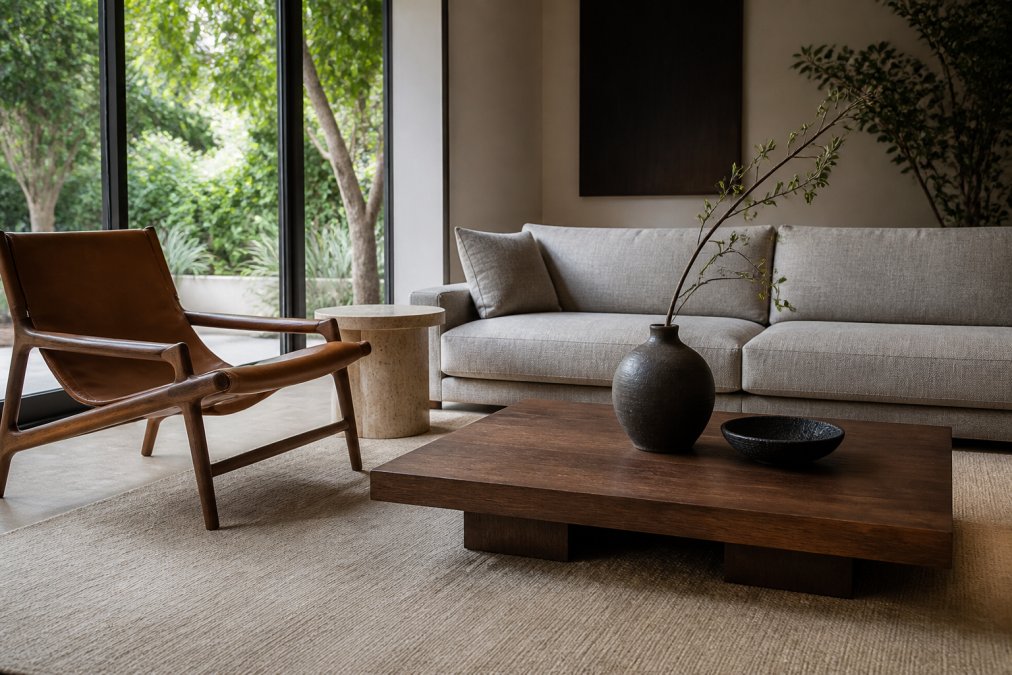
Trends are driven by novelty. Japandi is driven by restraint, and restraint does not date the way colour-of-the-moment palettes do.
Consider what actually expires in interior design: statement wallpaper, saturated accent colours, novelty finishes. None of those are load-bearing here. The core of this aesthetic, natural materials, clean lines, and functional simplicity, has been stable in both Japan and Scandinavia for generations, which is why design scholarship on Japanese and Nordic craft traditions keeps returning to the same principles rather than reinventing them.
Below, we break down the framework, the investment logic, and the budget routes, so you can decide with evidence rather than vibes.
Japandi Interior Design Principles: The Framework That Keeps It Timeless
Japandi interior design principles combine Japanese minimalism with Scandinavian functionality, and that combination is what gives the style staying power. Where Japanese design contributes restraint, negative space, and wabi-sabi imperfection, Scandinavian design contributes hygge, light wood, and everyday usability.
Rooted in Japanese Minimalism and Scandinavian Functionality
Both traditions share an unusual trait: they were shaped by limited space and limited daylight. Japanese interiors prioritised spatial harmony and clutter-free living. Scandinavian interiors prioritised warmth, craftsmanship, and light wood to counter long dark winters.
Neither tradition treats decoration as the goal. Function comes first, then beauty is built into the function. That order of operations is why the look holds up: you are not buying a mood, you are buying furniture that works.
Key Elements That Define a Lasting Japandi Space
- Natural materials: walnut, oak, travertine, linen, wool, leather
- Earthy tones and muted tones: warm neutrals rather than cool greys
- Clean lines and organic shapes: simple silhouettes, softened edges
- Textural contrast: smooth stone against rough ceramic against soft textile
- Functional decor: every object earns its place
- Biophilic design: plants, daylight, and a connection to the outdoors
Japandi vs Scandi Design: What Separates Them and Why It Matters
Japandi vs Scandi design comes down to warmth and restraint. Scandinavian design is brighter, softer, and more casual. Japandi pulls the palette darker and warmer, tightens the edit, and adds a contemplative, almost architectural stillness.
| Element | Scandinavian | Japandi |
|---|---|---|
| Palette | Bright whites, pale wood | Warm neutrals, dark wood accents |
| Density | Layered, cosy | Curated, sparse |
| Materials | Light oak, wool, sheepskin | Walnut, travertine, stone, leather |
| Mood | Hygge, casual comfort | Serenity, intentional living |
| Form | Practical, rounded | Sculptural, architectural |
Why the distinction matters: if you buy Scandi pieces expecting Japandi calm, you will end up with a brighter, busier room than you planned. If you buy Japandi pieces expecting Scandi cosiness, the space can read cold. Knowing which one you want prevents an expensive mismatch.
In practice, most high-end homes land somewhere between the two, and pieces that bridge both, like sculptural walnut or travertine, are the safest long-term buys.

Wabi-Sabi Home Decor Ideas: Adding Soul and Imperfection to a Timeless Look
Wabi-sabi home decor ideas work because imperfection is the opposite of trend-chasing. A perfect, glossy surface belongs to a season. A textured, slightly irregular one belongs to no season at all.
The concept is simple: wabi-sabi finds beauty in the impermanent, the incomplete, and the natural. Applied to interiors, it means:
- Travertine and stone pieces with visible texture and tonal variation
- Hand-thrown ceramics rather than matching sets
- Raw or lightly finished wood that develops a patina
- Asymmetric arrangements rather than mirrored symmetry
- One or two objects with genuine age or wear
What most guides miss is that wabi-sabi is the anti-trend mechanism inside Japandi. You cannot make a patinated material look dated, because its appeal is its history, not its newness.
Investment Value and Longevity: How to Choose Pieces That Last
Investment value in Japandi furniture comes from material and form, not branding. A sculptural walnut table or a travertine pedestal will hold its relevance far longer than a trend-led accent piece, because nothing about it is tied to a specific season.

Here is how to judge a piece before you buy:
- Is the primary material natural and repairable (solid wood, stone, leather)?
- Would this silhouette look reasonable in a photo from 20 years ago?
- Does it work in at least three different rooms or layouts?
- Is the finish honest, or does it imitate something cheaper?
- Can it be reupholstered, refinished, or repaired rather than replaced?
Pieces that pass all five tend to appreciate in usefulness over time. Pieces that fail two or more are the ones that end up on a resale listing within three years.
Budget-Friendly Ways to Embrace Japandi Style Without Compromising Quality
A Japandi room can be built gradually, and that is the budget-friendly route.
Then layer:
- Anchor piece first: a walnut or travertine table, or a lounge chair, new or vintage
- Lighting second: warm, low, and diffused rather than bright and overhead; paper lanterns and simple ceramic bases work at any price point
- Textiles third: linen, wool, and cotton in muted tones; vintage wool blankets and raw linen curtains are widely available secondhand
- Decor last: ceramics, a branch, one considered object; hand-thrown mugs from local markets often outperform mass-produced sets
Regional adaptability matters here too. In a small urban apartment, Japandi works with a single low-profile sofa, a wall-mounted shelf, and a floor lamp; the style's emphasis on negative space makes small rooms feel larger, not emptier. In a large suburban home, the same principles scale up with a statement dining table, a bench instead of chairs, and a few oversized ceramics to anchor the space. The budget route in both cases is the same: buy the anchor well, source the rest slowly, and let the edit do the work.

The Psychological Benefits of Japandi: Calm, Clarity, and Intentional Living
The psychological benefits of Japandi come from reduced visual noise, but the mechanism is more specific than most articles admit. Clutter-free rooms with natural materials and soft, diffused light lower the amount of information your eye has to process, and many people find that translates into a calmer, more restful space.
Conclusion: Why Japandi Style Is More Than a Passing Trend
The honest answer to whether Japandi style is just trendy is that the aesthetic label may cycle in and out of media coverage, but the underlying principles will not. Japanese minimalism and Scandinavian functionality were solving real problems, light, space, and daily use, long before anyone called the result Japandi.
Frequently Asked Questions
Is Japandi going out of style?
No. Japandi style is rooted in enduring design philosophies like minimalism and functionality, which have remained relevant for decades. Its focus on natural materials, craftsmanship, and timeless appeal means it evolves rather than fades. Unlike fast trends, Japandi interiors are designed to last, making them a sound investment for homeowners seeking longevity.
Are wabi-sabi and Japandi the same?
They are related but distinct. Wabi-sabi is a Japanese worldview that finds beauty in imperfection and transience, often expressed through weathered textures and asymmetry. Japandi combines this with Scandinavian functionality and warmth. You can incorporate wabi-sabi home decor ideas, like a travertine pedestal side table, into a Japandi space to add depth and character.
What are common Japandi decor mistakes?
Common mistakes include over-cluttering with too many accessories, ignoring textural contrast, and choosing cold, sterile pieces instead of warm, natural materials. Another error is treating Japandi as purely monochrome; muted earthy tones and light wood are essential. Avoid matchy-matchy sets and instead curate slowly, mixing old and new for a lived-in feel.
How does Japandi differ from pure Scandinavian minimalism?
Japandi blends Scandinavian functionality with Japanese minimalism. While Scandi design emphasizes light woods, hygge, and bright spaces, Japandi introduces darker earthy tones, wabi-sabi imperfection, and a more deliberate, clutter-free approach. The result is a warmer, more grounded aesthetic that still prioritizes clean lines and craftsmanship.
The challenge with Japandi is not finding beautiful pieces, it is choosing ones you will still want in ten years. Suemasue's Place exists for that decision, offering a curated collection of timeless furniture and decor built around natural materials and refined craftsmanship, including sculptural walnut tables, a travertine pedestal side table, and statement seating that complements organic modern and Japandi interiors. Shop the Collection and build a home that feels uniquely yours.