

Table of Contents
- Understanding Luxury Home Decor: Quality, Craftsmanship, and Authenticity
- How to Style a Luxury Home: Building Your Aesthetic Foundation
- Statement Pieces and Decorative Accents: Creating Visual Interest
- Investment Pieces for the Home: Timeless vs. Trend
- Sourcing Authentic Artisan and Handcrafted Decor
- Luxury Bed Comforters and Textile Selections for Sophistication
- Maintenance and Care: Preserving Your Investment
- Practical Shopping Strategies: Building a Cohesive Luxury Home
- Frequently Asked Questions
Last Updated: September 27, 2026
Understanding Luxury Home Decor: Quality, Craftsmanship, and Authenticity
Luxury home decor is fundamentally about curated pieces that combine exceptional craftsmanship, natural materials, and timeless design. It's not about accumulating expensive items, it's about selecting pieces that elevate your space through their inherent quality and the stories they tell. At Suemasue's Place, we believe that true luxury lives in the details: the veining of natural stone, the grain of solid wood, the weight and presence of a well-made object in your hand.
True luxury lies in authenticity: a thoughtfully sourced artisan piece improves with age and tells a genuine story, while a mass-produced item with a luxury price tag delivers only the illusion of quality.
This guide helps you identify what matters, source pieces that will last, and build a home that feels both sophisticated and lived-in.
How to Style a Luxury Home: Building Your Aesthetic Foundation
Before purchasing anything, establish your foundational design direction, minimalist restraint, organic modern warmth, or maximalist richness, as it determines every decision that follows.
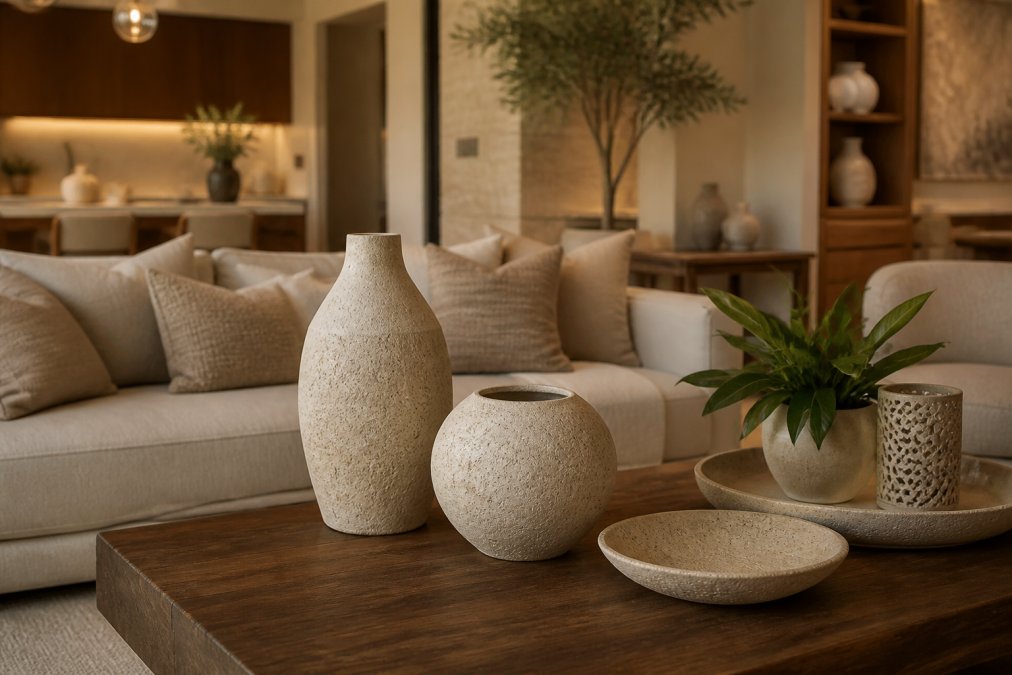
The most common mistake is treating decor shopping like checking boxes: buying a beautiful mirror, then a striking lamp, then a rug that caught your eye. Six months later, your space feels chaotic and expensive but not cohesive. Luxury styling requires intention before acquisition.
Start by defining your color palette. Most sophisticated interiors rely on 3-4 primary colors: a dominant neutral (whites, warm grays, soft beiges), a secondary warm tone (cream, taupe, soft terracotta), and 1-2 accent colors used sparingly. Natural materials like travertine, acacia wood, and ceramic naturally guide you toward earthy, sophisticated palettes that age beautifully. According to interior design principles from Design Observer, restraint in color choice is what separates professional-looking spaces from overstimulating ones.
Understand scale and proportion: a statement piece should command attention without overwhelming the room. Multiple statement pieces compete for attention and dilute their impact.
The 3-5-7 Rule for Balanced Luxury Interiors
The 3-5-7 rule organizes decor into three layers: large anchoring pieces (furniture, mirrors, artwork), five medium-scale accents (vases, bowls, decorative objects), and seven smaller finishing touches (candles, books, smaller ceramics). This progression creates visual interest while maintaining sophistication.
Apply this rule room by room. In a living room, anchor with a sofa and statement mirror, add medium-scale bowls and vases, then finish with candles, books, and smaller ceramics.
The Travertine Decorative Bowl ($99) and Travertine Pedestal Candle Holder ($199) from Suemasue's Place exemplify this layering approach. The bowl serves as a medium-scale anchor on a console or coffee table, while the candle holder provides sculptural interest at a smaller scale. Together with a few additional pieces, they create a composed vignette that feels curated rather than accidental.

Curating Your Color Palette and Material Choices
Your color palette should extend your home's architecture and personal preferences, not chase trends. Natural materials dictate their own color story: travertine brings warm beiges and soft grays, acacia wood introduces honey and amber tones, ceramics offer neutral whites. These materials speak the same visual language, creating cohesion.
Choose three core materials and use them consistently. Travertine, acacia wood, and ceramic create a sophisticated, sustainable trio that signals intention and craftsmanship.
Vary scale and texture within your material palette.
Statement Pieces and Decorative Accents: Creating Visual Interest
A statement piece commands attention through scale, material, or sculptural presence and anchors a space, while decorative accents support and enhance.
Travertine Pedestal Candle Holder →
Investment Pieces for the Home: Timeless vs. Trend
Investment pieces combine exceptional craftsmanship with timeless design, while trend pieces are items you enjoy knowing they'll eventually feel dated.
Sourcing Authentic Artisan and Handcrafted Decor
Authentic artisan pieces are made by individuals or small workshops using traditional techniques. Each piece is unique, so you evaluate craftsmanship and material quality rather than comparing identical units.
Natural Materials and Sustainability in Luxury Decor
Natural materials and ethical sourcing increasingly define luxury. A piece made from sustainably harvested acacia wood or responsibly sourced travertine carries values beyond aesthetics. It signals that you care about impact, not just appearance.
Luxury Bed Comforters and Textile Selections for Sophistication
Luxury textiles, particularly bed comforters, deserve dedicated attention because bedrooms are intimate spaces where quality directly impacts your daily experience. A luxury bed comforter isn't just about thread count; it's about fiber quality, construction method, and how the piece performs over years of use.
Maintenance and Care: Preserving Your Investment
Natural stone like travertine requires occasional sealing and regular dusting. Acacia wood benefits from occasional oiling. Quality ceramics need careful handling to avoid breakage.
Practical Shopping Strategies: Building a Cohesive Luxury Home
Building a luxury home doesn't require buying everything at once. Adopt a strategic approach to acquisition.
| Shopping Phase | Timeline | Budget Focus | Examples |
|---|---|---|---|
| Aesthetic Research | 2-4 weeks | $0 | Mood boards, inspiration gathering |
| Anchor Pieces | 1-3 months | 50-60% of budget | Furniture, large mirrors, lighting |
| Statement Pieces | 2-4 months | 20-30% of budget | Sculptural vases, unique art, statement accessories |
| Accents & Finishing | Ongoing | 10-20% of budget | Candles, small bowls, textiles, smaller ceramics |
Frequently Asked Questions
What is the 3-5-7 rule in decorating, and how does it apply to luxury home decor?
The 3-5-7 rule helps create balanced, visually sophisticated spaces. Arrange decor in groups of three, five, or seven items, odd numbers feel more organic and curated. For luxury home decor, this prevents spaces from feeling overly matchy or designed. For example, pair a sculptural ceramic vase with two smaller natural stone accents on a console, creating visual interest without clutter. This principle works across all design styles, from minimalist to maximalist luxury interiors.
How can you tell if home decor is high quality?
High-quality luxury home decor shows authentic craftsmanship through material integrity, unique character, and thoughtful construction. Examine natural stone pieces for genuine veining and texture, each should be one-of-a-kind. Check wood furniture for solid construction and visible grain patterns rather than veneer. Feel the weight and finish of ceramics and decorative items. Authentic artisan pieces often feature slight variations that prove handcrafted origins, while mass-produced items appear uniform. Genuine luxury prioritises durability and timeless design over trendy finishes.
What's the difference between investment pieces and trend-based decor for a luxury home?
Investment pieces are timeless items crafted from quality materials that appreciate in value and remain relevant for decades. Natural travertine bowls, solid wood furniture, and handcrafted ceramics exemplify this category. Trend-based decor follows current aesthetics and may feel dated within years. For luxury home decor shopping, allocate your budget toward investment pieces that define your space's foundation, then layer in trend pieces sparingly. This approach creates a home that evolves gracefully without requiring constant replacement, protecting both your aesthetic and financial investment.
Can I mix pieces from a curated luxury collection with items I already own?
Yes, absolutely. Luxury home decor works best when blended thoughtfully with existing pieces. Focus on shared design principles: natural materials, neutral palettes, and refined craftsmanship create cohesion across different sources. A handcrafted travertine pedestal candle holder complements existing modern or organic modern furniture without requiring a complete redesign. Start by identifying the aesthetic threads in what you own, colour, texture, material quality, then select new pieces that echo those elements. This approach prevents spaces from feeling overly curated and maintains the lived-in sophistication that defines luxury interiors.
How do wealthy homeowners typically approach luxury home decor shopping?
Affluent homeowners prioritise quality over quantity, investing in authentic artisan pieces and handcrafted items that showcase genuine craftsmanship. They source selectively from curated collections that reflect their aesthetic vision rather than following trends. Many work with interior designers or consult collections inspired by high-end design media to ensure cohesion. They understand that luxury isn't about accumulation but about surrounding themselves with meaningful, well-made pieces that elevate daily living. This approach emphasises bespoke sourcing, natural materials, and timeless design, the hallmarks of sophisticated, enduring luxury interiors.
What luxury items should every home have?
Every luxury home benefits from statement lighting, handcrafted textiles, high-quality decorative mirrors, and curated wall art. Natural stone accents like travertine bring organic sophistication to any room. Quality bed comforters and bedding set the tone for restful luxury. Functional art pieces, sculptural vases, decorative bowls, or artisan bookends, serve double duty as both beauty and purpose. Essential luxury items share common traits: authentic materials, refined craftsmanship, and timeless design. These foundational pieces create the sophisticated backdrop upon which you layer personal style and expression.
How do I avoid making my space feel too matchy-matchy when decorating with luxury pieces?
Intentional variety prevents curated spaces from feeling sterile. Mix handcrafted pieces with found items, vary heights and textures, and balance statement pieces with simpler accents. Use the 3-5-7 rule to arrange decor in odd-numbered groupings that feel organic rather than symmetrical. Incorporate pieces from different eras or styles within your overall aesthetic framework. Negative space matters, leave breathing room on shelves and surfaces. Natural variations in materials like travertine or wood actually enhance authenticity, creating visual interest that prevents uniformity. The goal is refined sophistication, not showroom perfection.