

Table of Contents
- What Is Japandi Interior Style?
- Japandi Color Palette: The Foundation of the Look
- Japandi Furniture Characteristics: Form and Function
- How to Style a Japandi Living Room: A Step-by-Step Approach
- Japandi for Small Spaces and Apartments
- Common Japandi Mistakes to Avoid
- Conclusion: Start Your Japandi Journey
- Frequently Asked Questions
Last Updated: September 9, 2026
What Is Japandi Interior Style?
Japandi interior style is the deliberate fusion of Japanese minimalism with Scandinavian functionality, creating spaces that feel warm, serene, and effortlessly curated. Rather than a strict set of rules, this design philosophy prioritizes balance, natural materials, and intentional living over excess. For those seeking a home that feels both refined and deeply restful, understanding what is japandi interior style offers a path toward a more meaningful connection with your living space.
This aesthetic is more than a trend; it is a response to the clutter of modern life. The style strips away the non-essential, leaving room for craftsmanship and texture to speak. It shares DNA with the Scandinavian concept of hygge and the Japanese principle of wabi-sabi, which finds beauty in imperfection and natural aging.
The result is a space that is neither starkly minimalist nor purely rustic. Clean lines meet organic textures, muted shades are warmed by wood grains, and every object earns its place. Below, we show you how to translate this philosophy into your own home, covering the foundational color palette, furniture selection, and practical styling steps.
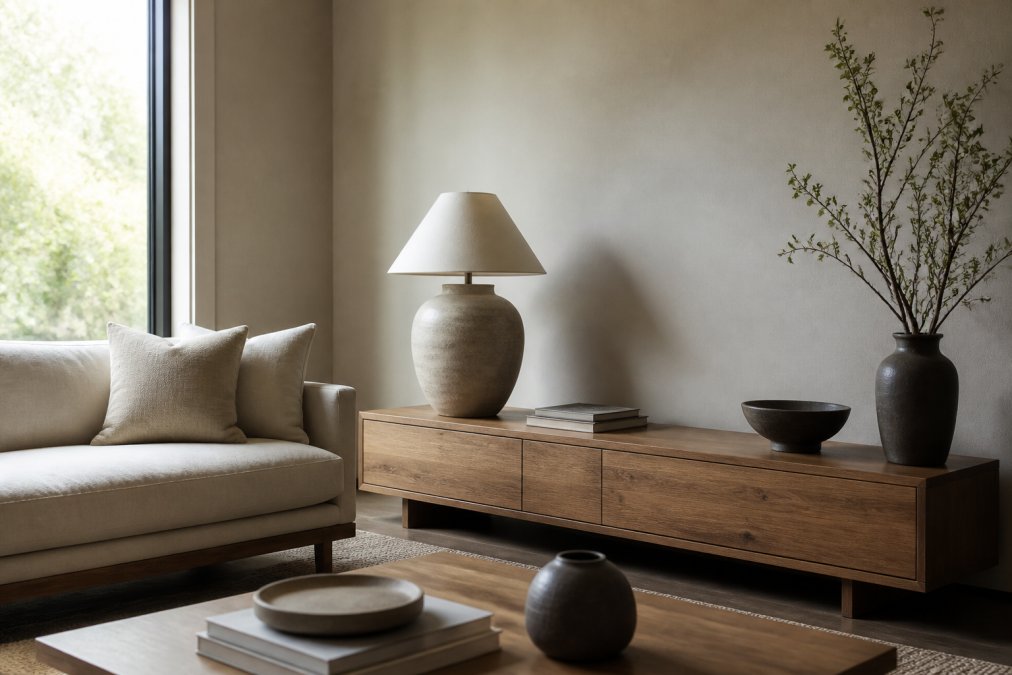
Japandi Color Palette: The Foundation of the Look
The Japandi color palette is built on a foundation of earthy tones and muted shades that promote tranquility and spatial flow. Think soft whites, warm greiges, and gentle beiges, punctuated by deeper accents of charcoal, forest green, or rust. This neutral palette allows natural textures like stone, bamboo, and rattan to take center stage without visual competition.
Start by selecting a dominant wall color that feels warm rather than clinical. Avoid pure white; instead, choose a tone with a hint of beige or gray to add depth.
- Layer in soft furnishings like linen curtains and wool throws in complementary earthy tones.
- Introduce textural contrast through a travertine pedestal side table or a natural stone lamp base.
- Keep large furniture pieces in the same tonal family to maintain a sense of calm.
The goal is a cohesive, understated canvas where the interplay of light and texture creates interest rather than bold color blocking.

The 60-30-10 Rule in Japandi
A practical framework for applying this palette is the classic 60-30-10 distribution. In Japandi, this translates to:
- 60%, The Base: Walls, large area rugs, and upholstered pieces (sofas, beds) in warm off-whites, soft greiges, or light warm grays. These tones should have a subtle warmth to them, look for paint names that include "warm," "sand," or "oat" rather than "pure" or "crisp."
- 30%, The Secondary: Wood cabinetry, sideboards, dining tables, and larger textile pieces like curtains. These introduce the natural wood tones (oak, walnut, bamboo) that ground the space.
- 10%, The Accent: Smaller objects, ceramic vases, stone lamps, throw pillows, books, in deeper, earthy tones like charcoal, forest green, rust, or terracotta. These provide visual anchors without overwhelming the calm.
Choosing the Right White (It's Harder Than It Looks)
A common mistake in Japandi interiors is selecting a white that reads too cool or clinical. Pure white (hex #FFFFFF) reflects light harshly and creates a sterile atmosphere that works against the style's warmth (psychologytoday.com).
Instead, look for warm whites and off-whites with subtle undertones:
- Greige: A blend of gray and beige that reads warm without being yellow. Popular options include Benjamin Moore's "Edgecomb Gray" (HC-113) or Sherwin-Williams' "Agreeable Gray" (SW 7029).
- Warm Oat: Whites with a hint of yellow or cream, like Farrow & Ball's "Shaded White" (No. 201) or "Pointing" (No. 2003).
- Soft Mushroom: Light greiges with a slightly deeper value, such as Benjamin Moore's "Pale Oak" (OC-20).
A reliable test: paint a large swatch (at least 2x2 feet) on your wall and observe it at different times of day. A warm white should feel cozy in the evening and fresh in the morning.
Material as Color
In Japandi, color is often carried by material rather than paint. A travertine side table brings warm beige and cream tones with natural veining; a walnut console introduces deep browns; a bamboo blind adds golden undertones. When unsure whether a space needs more color, consider adding a material with a new tone before reaching for paint.
A Note on Dark Accents
While Japandi favors light, airy spaces, a single dark wall or a large piece of charcoal furniture can add grounding and sophistication. Use dark tones sparingly, on a single accent wall behind a bed, or on a media console, to create depth without making the room feel smaller. Dark forest green and deep rust work particularly well because they echo natural landscapes rather than artificial pigments.
Japandi Furniture Characteristics: Form and Function
Japandi furniture characteristics center on low profiles, honest materials, and a clear expression of purpose. Every piece should offer functionality while displaying refined craftsmanship, avoiding ornate details in favor of clean lines and simple silhouettes. Wood is the primary material, often left with a visible grain or natural oil finish to highlight its character.
The philosophy of intentional living means choosing fewer, better pieces. A sculptural Wabi-Sabi Travertine Pedestal Side Table, for instance, serves as both a functional surface and a piece of art. When selecting furniture:

- Prioritize pieces made from sustainable materials like solid oak, bamboo, or rattan.
- Look for handmade or artisan-crafted items that show evidence of the maker's hand.
- Choose furniture with hidden storage to support a clutter-free environment.
This approach stands in contrast to fast furniture trends, offering enduring design that ages gracefully. The investment is in quality and timelessness, helping to ensure your space does not feel dated in a few years.
How to Style a Japandi Living Room: A Step-by-Step Approach
Styling a Japandi living room requires a deliberate move away from maximalist décor toward a curated selection of statement pieces. Start by decluttering the space, removing items that do not serve a purpose or bring a sense of peace. This single step is the most critical for achieving the style's signature calm.
Once the space is clear, follow these steps to build the room:
- Anchor the room with a low-profile sofa in a neutral linen or wool fabric.
- Add a natural focal point, such as a reclaimed wood coffee table with a live edge.
- Layer in lighting with a warm ambient glow, using a Kyoto Stone Table Lamp on a console to create a peaceful evening atmosphere.
- Introduce organic accents like a Travertine Arch Bookend to style a stack of books or a Travertine Pedestal Candle Holder for a refined focal point on the dining table.
- Finish with greenery, choosing simple, sculptural plants like bonsai or olive trees in unglazed ceramic pots.
A common mistake is over-accessorizing. Resist the urge to fill every surface. In Japandi, negative space is a design feature, allowing each piece to breathe and be appreciated.

The Japandi Living Room Layout: A Practical Framework
Japandi layout principles differ from Western living rooms in one key way: the conversation zone is lower and more grounded. Rather than pushing all furniture against walls, create a central gathering area with these proportions:
- Seating height: Low-profile sofas and floor cushions (zabuton) sit 14-16 inches from the floor, noticeably lower than standard 18-inch seat heights (peer-reviewed research). This creates a grounded, meditative feel.
- The coffee table gap: Leave 16-18 inches between the sofa edge and coffee table for comfortable reach without crowding.
- Traffic flow: Maintain at least 24 inches of clear walking space around the main seating cluster. In Japandi, open floor space is a design feature, not wasted area.
The 70/20/10 Surface Rule
To avoid the "showroom" look, apply this ratio to every horizontal surface:
- 70% empty space, Let the material (wood grain, stone texture) speak.
- 20% functional objects, A book, a remote, a cup of tea.
- 10% decorative objects, One sculptural piece, one organic element (a small branch, a single stem).
This rule prevents the cluttered look that undermines Japandi's calm while still allowing personality to show.
Layering Light Like a Japandi Designer
Japandi lighting is about creating pools of warmth, not washing a room in uniform brightness. Use three distinct layers:
- Ambient light: A paper lantern pendant (like those from Japanese brand Ozeki) or a recessed dimmer system set to 60-70% brightness. The goal is soft, diffused illumination.
- Task light: A sculptural floor lamp with a linen shade positioned for reading. The Kyoto Stone Table Lamp works well here, its natural stone base adds texture while the shade directs light downward.
- Accent light: Small, warm LED spots (2700K color temperature) aimed at a ceramic vase or a piece of art (energy.gov). This creates depth and highlights the textures you've curated.
Hiding Modern Technology in a Japandi Space
Integrating modern tech without breaking the aesthetic can be a challenge. Here's how to manage it:
- Television: Mount the TV on a wall and frame it with a custom wooden surround that matches your joinery. When not in use, hang a sliding panel of linen or shoji screen over it. This is a common solution in Japanese homes.
- Speakers and soundbars: Choose fabric-covered options (like Sonos or Bang & Olufsen) in neutral tones, and place them on low shelves rather than prominent surfaces. Alternatively, use in-wall speakers that are invisible.
- Cables and chargers: Run cables through cable management channels painted to match your wall color. Place charging stations inside a wooden box or ceramic vessel with a lid, visible cables are the fastest way to break the aesthetic.
- Wi-Fi router: Tuck it inside a woven basket or behind a ceramic vase on a shelf. Many routers don't need to be visible to function well.
The Single Most Important Styling Test
When you think a room is finished, take a photo in black and white. Japandi relies on texture and form, not color. If the room looks flat or confusing in monochrome, you need more textural contrast, add a chunky wool throw, a rough ceramic vase, or a piece of reclaimed wood. If it looks busy, remove one decorative object from each surface.
Japandi for Small Spaces and Apartments
Many assume Japandi requires sprawling, open-plan homes, but its principles of simplicity and spatial flow make it exceptionally well-suited for small apartments. The focus on decluttering and multi-functional furniture is a natural fit for compact living, creating a sense of calm and order without feeling cramped.
To apply Japandi in a small space, prioritize furniture that serves multiple purposes. A pedestal side table can act as a nightstand, a plant stand, and a place to rest a book. Use light, neutral colors on walls to make the room feel larger and maximize natural light by keeping window treatments minimal.
- use vertical space with slim, wall-mounted shelving in natural wood.
- Choose low-profile furniture to draw the eye upward and make ceilings feel higher.
- Keep floors mostly clear to enhance the feeling of openness.
By focusing on a few high-quality, functional pieces rather than many decorative ones, even a studio apartment can embody the tranquility of this style.
Common Japandi Mistakes to Avoid
A frequent mistake is treating Japandi as a rigid trend, resulting in a space that feels too curated and matchy-matchy instead of organic and lived-in. A room filled with identical, brand-new items lacks the soul that comes from mixing old and new, or the subtle imperfections celebrated by wabi-sabi.
Another pitfall is confusing minimalism with emptiness. Japandi is not about stark, cold rooms; it is about warmth and comfort.
To avoid these issues, blend your existing pieces with new investments. Mix a modern linen sofa with a vintage wooden stool, or pair a new travertine lamp with a well-worn ceramic vase. This creates a layered, collected look that evolves with you and resists becoming a passing trend.
Conclusion: Start Your Japandi Journey
Creating a Japandi home is a process of refinement, not a quick makeover. It asks you to slow down, evaluate what truly serves you, and invest in pieces that offer both beauty and function. The challenge lies in resisting the urge to fill space and instead allowing a few exceptional items to define the room.
For those ready to build a space that feels both sophisticated and deeply personal, Suemasue's Place offers a curated collection of natural stone décor and furniture designed to complement this aesthetic. Our focus on refined craftsmanship and organic modern style helps you avoid a look that feels too curated, providing timeless pieces that can mix effortlessly with what you already own. Explore our selection of sculptural lighting and accent tables to bring warmth and understated elegance into your home.
Frequently Asked Questions
What are the 7 rules of Japandi home style?
The seven rules of Japandi style are: 1) embrace minimalism and declutter, 2) prioritize functionality in every piece, 3) use a neutral color palette with warm earthy tones, 4) incorporate natural materials like wood, stone, and rattan, 5) balance clean lines with organic textures, 6) maximize natural light, and 7) celebrate craftsmanship and wabi-sabi imperfections. These principles create a home that feels calm, intentional, and connected to nature. Japandi interior style is about curating a space that supports a slower, more mindful way of living.
Is Japandi style still trending?
Japandi style continues to be relevant. Its appeal lies in its timeless principles of minimalism, functionality, and warmth, which resonate with homeowners seeking calm and intentional living. Unlike fleeting fads, Japandi's focus on natural materials, craftsmanship, and balance gives it enduring relevance. As more people prioritize well-being and sustainability in their homes, Japandi-inspired interiors remain popular. Investing in Japandi furniture and décor can be a choice for a lasting aesthetic.
What are common Japandi decor mistakes?
Common Japandi decor mistakes include over-cluttering surfaces with too many accessories, using a palette that is too stark or cold, and mixing in pieces that are too ornate or mismatched. Many also forget to incorporate enough natural textures like wood, stone, and linen, which are essential for warmth. Another mistake is choosing furniture that sacrifices comfort for style, as Japandi values functionality. To avoid these pitfalls, focus on a curated selection of high-quality pieces, a consistent neutral palette, and a balance of clean lines with organic, textural contrast.
What are the core differences between Scandi and Japandi design?
While both styles share minimalism and functionality, key differences exist. Scandinavian (Scandi) design emphasizes bright, airy spaces with a white-based palette, light woods, and a hygge focus on comfort and soft furnishings. Japandi, however, blends Scandinavian warmth with Japanese wabi-sabi, favoring darker, earthy tones, deeper wood grains, and a more subdued, contemplative atmosphere. Japandi also places a stronger emphasis on craftsmanship and the beauty of natural imperfections. In practice, Japandi feels warmer and more grounded, while Scandi can feel more crisp and light.
The Japandi interior style is more than a visual preference; it is a commitment to intentional living, balance, and enduring quality. By focusing on a neutral palette, functional furniture, and the beauty of natural materials, you can create a sanctuary that feels timeless. Get started with Suemasue's Place and shop the collection to find the natural stone pieces that will anchor your serene, sophisticated space.