

Table of Contents
- Is Japandi Style Still Trendy in 2026?
- Japandi Interior Design Elements That Define the Look
- Japandi vs Scandi Minimalism: What Sets Them Apart
- How to Style a Japandi Living Room
- Making Japandi Work in Small or Rental Spaces
- Why Japandi Style Endures: Longevity, Maintenance, and Budget
- The Calming Effect: Psychological Benefits of Japandi Design
- Conclusion: Is Japandi Style Still Trendy?
- Frequently Asked Questions
Last Updated: October 4, 2026
Is Japandi Style Still Trendy in 2026?
Yes, Japandi style is still trendy in 2026, and it has moved from a passing aesthetic to a lasting design language. Pairing Japanese minimalism with Scandinavian warmth, it remains one of the most searched and most specified interior styles for renovations.
The short answer: Japandi stopped being a trend the moment it started solving a genuine problem. As architectural and interior design coverage from Dezeen has documented, designers keep returning to restrained, natural-material interiors because clients ask for spaces that feel restful rather than impressive.
What most trend forecasts get wrong is treating Japandi as a colour palette. It is a set of decisions about proportion, material, and restraint, and those decisions age slowly.
Japandi Interior Design Elements That Define the Look
Japandi interior design is a hybrid aesthetic that combines Japanese minimalism and wabi-sabi with Scandinavian functionality and hygge. It favours low furniture, natural materials, muted hues, and a limited number of deliberately chosen objects.
The elements that hold the look together are consistent:
- Low, grounded furniture with visible legs and simple silhouettes
- Natural materials: walnut, oak, stone, linen, wool, rattan, and paper
- Muted hues drawn from clay, sand, moss, and stone
Natural Materials and Raw Textures
Texture does the emotional work in a Japandi room. Because the palette is quiet, contrast has to come from surface: a raw stone lamp base against smooth walnut, a nubby wool rug under a leather chair, a matte ceramic vase beside a glossy window. The Kyoto Stone Table Lamp uses a natural stone-inspired base and warm ambient LED illumination, exactly the kind of quiet textural accent the style depends on.

Muted Hues and Soft Lighting
Japandi palettes stay within a narrow band: warm whites, oatmeal, greige, mushroom, charcoal, and deep walnut. Accents come from black metal, aged brass, or a single dark ceramic. Lighting should be layered and soft, avoid overhead downlights as the primary source, and use table lamps, floor lamps, and diffused pendants at low levels so shadows stay gentle.
Japandi vs Scandi Minimalism: What Sets Them Apart
Japandi is warmer, darker, and more sculptural than Scandinavian minimalism. Scandi design prioritises light, airy palettes, pale woods, and practical function; Japandi keeps that functionality but adds Japanese restraint, deeper wood tones, and a stronger sense of ritual and imperfection.
| Feature | Scandinavian Minimalism | Japandi |
|---|---|---|
| Palette | Bright whites, pale birch | Warm neutrals, walnut, charcoal |
| Wood tone | Light and cool | Medium to dark and warm |
| Forms | Simple, practical, familiar | Sculptural, low, organic |
| Philosophy | Hygge and functionality | Wabi-sabi, balance, intentional living |
| Objects | Functional, cheerful | Fewer, curated, imperfect |
| Best for | Small bright apartments | Calm, considered living spaces |
The scandi-japanese fusion works because the two traditions agree on the essentials: clean lines, natural materials, and clutter-free living. They disagree mainly on temperature. Scandi leans bright and sociable; Japandi leans quiet and grounded.
Where the Two Styles Actually Diverge in Practice
The differences show up in three places: wood tone, light direction, and object count.
- Wood tone. Scandi rooms typically use ash, birch, or pale oak with a cool, almost whitewashed finish. Japandi shifts toward walnut, smoked oak, and occasionally stained ash with a warmer, deeper grain. If you already own pale oak pieces, introduce one deeper walnut element, such as a round coffee table, and the room shifts toward Japandi without a full reset.
- Light direction. Scandi relies on bright, diffuse daylight and white walls to bounce it around. Japandi layers light at lower levels, table lamps, floor lamps, diffused pendants, so shadows stay soft and the room feels grounded after dark.
- Object count. Scandi tolerates more pattern, colour, and everyday objects because the palette is bright enough to absorb them. Japandi treats negative space as a feature, with one focal object per surface.
How to Tell Which Direction a Room Is Leaning
A quick diagnostic: stand in the doorway and ask three questions.

- Is the dominant wood tone light and cool, or medium-to-dark and warm?
- Is the light coming mostly from above and outside, or from low, layered sources?
- Are there more than three objects visible on any horizontal surface?
Light, overhead, and yes reads Scandi; dark, layered, and no reads Japandi. Most real homes sit in between, the goal is a consistent direction, not purity.
The Overlap Worth Keeping
Both styles share a commitment to natural materials, functional furniture, and clutter-free living. That overlap is why they blend so easily and why Japandi has outlasted pure Scandi minimalism in many markets.
How to Style a Japandi Living Room
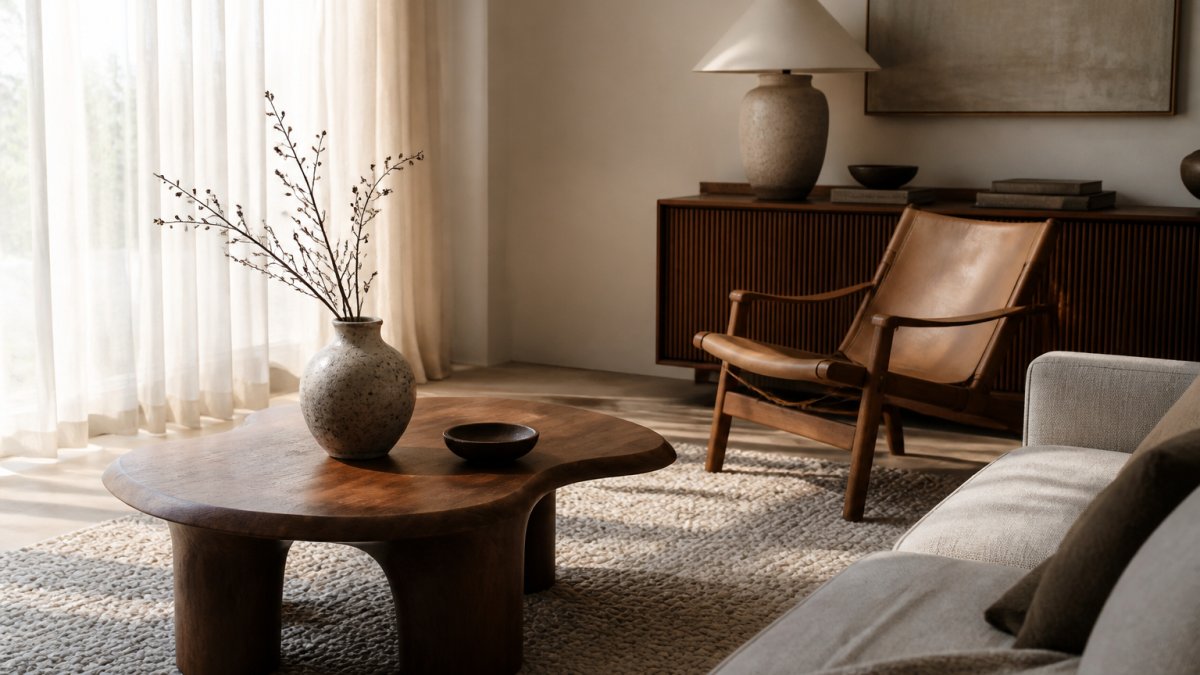
Styling a Japandi living room comes down to two moves: clear the space, then build texture back in deliberately. Most rooms fail at the first step.
Step 1: Start With a Clutter-Free Layout
- Remove everything from the room except furniture and lighting.
- Keep only pieces you use weekly.
- Pull seating away from walls to create breathing room.
- Leave at least one wall largely empty.
- Choose a single focal point and orient the room toward it.
The goal is spatial harmony, not emptiness, calm but lived in.
Step 2: Layer Texture Through Furniture and Decor
Build the room back in layers, from the floor up:
- Anchor with a rug in wool, jute, or a wool-blend in a neutral tone.
- Add one sculptural seat. The Nordic Leather Lounge Chair has a curved silhouette and deep upholstered comfort that softens the restraint of a minimal room.
- Choose a grounded centrepiece. A walnut round coffee table with a sculptural pedestal base gives the room weight and warmth.
- Finish with one or two objects: a stone lamp, a ceramic vessel, a single branch.
- Stop. The most common mistake is adding a sixth element.
Step 3: Adapt the Formula to the Room You Actually Have
Most Japandi guides assume a large, open-plan living room. Here is how the same formula adjusts for three common situations.

Small living rooms (under 200 sq ft). Scale matters more than style.
Rental apartments. You cannot change the walls, flooring, or overhead lighting, but you can change almost everything else.
Nordic Leather Lounge Chair | Sculptural Luxury Accent Chair →
Open-plan spaces. The challenge is definition, not space. Use a low console or a change in rug texture to mark the living zone without building a wall, and keep the palette consistent across the whole floor.
Step 4: Do It on a Budget
Japandi does not require a full refit. Spend on two or three anchor pieces that will last a decade, then fill in with inexpensive textiles, ceramics, and plants.
- Anchor pieces (spend here): the lounge chair, the coffee table, the main rug. These carry the visual weight of the room and are the pieces you will keep longest.
- Fill-in pieces (save here): cushions, throws, vases, candle holders, dried branches, the pieces you will replace as seasons and tastes shift.
- Free moves: clear surfaces, pull furniture away from walls, lower the lighting, remove one object from every surface. These cost nothing and often do more than a new purchase.
A practical rule: if a piece is touched, sat on, or walked over daily, buy the best version you can afford. If it is looked at from across the room, buy the version that looks right and replace it when it stops working.
Making Japandi Work in Small or Rental Spaces
Japandi suits small and rental homes better than almost any other style, because it depends on restraint rather than square footage. Fewer, better pieces take up less visual and physical space.
Practical moves for renters:
- Use low furniture to make ceilings feel higher
- Choose dual-purpose pieces, such as a coffee table with storage
- Swap overhead lighting for plug-in table and floor lamps
For compact rooms, scale matters more than style: a single low lounge chair will make a small living room feel larger than a full three-seat sofa, and a round table removes hard corners and improves flow.
Why Japandi Style Endures: Longevity, Maintenance, and Budget
Japandi endures because it is built on materials and forms that do not date quickly. Walnut, stone, linen, and wool have been used in interiors for generations. A room assembled from those materials looks current in 2026 and will still look considered in 2036.
Maintenance is straightforward, which is part of the appeal:
- Walnut and oak: dust weekly, oil or wax once or twice a year
- Leather: wipe with a dry cloth, condition annually
- Stone and ceramic: dust dry, avoid abrasive cleaners
Budget is where most guides are unhelpful. Japandi does not require a full refit: buy the chair and the table once, then replace the cushions as often as you like.
The Calming Effect: Psychological Benefits of Japandi Design
Japandi's psychological appeal explains much of its staying power. Clutter-free rooms with soft lighting and natural materials reduce visual noise, which many people experience as mental relief after a working day.
The mechanisms are simple. Lower light levels in the evening support the body's wind-down routine.
This is not decoration for its own sake. The WELL Building Standard treats light, thermal comfort, and material choice as measurable contributors to occupant wellbeing, which is the same logic applied at home.
Conclusion: Is Japandi Style Still Trendy?
Japandi has outlasted the trend cycle because it answers a durable question: how do you make a room feel calm without making it feel empty? The answer, in practice, is restraint plus craftsmanship.
At Suemasue's Place, our collection is built around exactly that combination. The Nordic Leather Lounge Chair, the Walnut Round Coffee Table, and the Kyoto Stone Table Lamp each bring natural material and sculptural form into a room without adding visual noise.
Frequently Asked Questions
What are the 7 rules of Japandi home style?
Japandi style follows seven key rules: use natural materials like walnut and stone; keep a muted, earthy palette; prioritise function over decoration; embrace wabi-sabi imperfection; let in soft, diffused light; declutter relentlessly; and balance Japanese minimalism with Scandinavian warmth. These rules create a calm, timeless space that feels both refined and liveable, which is why Japandi style remains relevant in 2026.
What are common Japandi decor mistakes?
Common mistakes include overcrowding with too many accessories, mixing in bright synthetic colours, ignoring textural contrast, and treating Japandi as purely minimalist. The style needs warmth through natural materials and soft lighting. Another error is buying everything new; Japandi works best when you mix a few sculptural pieces, like a walnut coffee table, with items you already own to avoid a matchy-matchy look.
Are wabi-sabi and Japandi the same?
No, wabi-sabi is a Japanese worldview that finds beauty in imperfection and transience, while Japandi is a broader interior design style that blends Japanese minimalism with Scandinavian functionality. Wabi-sabi influences Japandi through raw textures and organic shapes, but Japandi also incorporates hygge, clean lines, and practical comfort. A Japandi room might feature a wabi-sabi ceramic vase alongside a modern leather lounge chair.
How does Japandi differ from pure minimalism?
Pure minimalism strips a space down to bare essentials, often feeling cold. Japandi adds warmth through natural materials like walnut, stone, and wool, plus soft lighting and textural contrast. It prioritises intentional living and spatial harmony rather than emptiness. In a Japandi living room, a sculptural coffee table and a stone lamp are functional art, not clutter, which keeps the look inviting and liveable.
The challenge with Japandi is not understanding it. It is resisting the urge to add one more thing. Suemasue's Place curates timeless furniture, lighting, and décor with refined craftsmanship and natural materials, including sculptural seating, walnut centrepieces, and stone lighting designed to complement organic modern and Japandi interiors. Shop the Collection and build a home that feels warm, considered, and unmistakably yours.