

Table of Contents
- What Defines Organic Modern Interior Design
- Earthy Color Palettes for 2026
- Natural Materials and Textures That Ground Your Space
- Sculptural Shapes and Curved Furniture in Organic Modern Design
- How to Style Organic Modern Spaces on Any Budget
- Choosing the Right Organic Modern Living Room Rug
- Caring for Raw Materials: Maintenance and Longevity
- Frequently Asked Questions
Last Updated: September 30, 2026
What Defines Organic Modern Interior Design
Organic modern interior design blends natural materials, curved forms, and warm minimalism to create spaces that feel both contemporary and grounded. It's the aesthetic that emerged when minimalism finally learned to breathe, when designers realized that less stuff doesn't mean less warmth. At Suemasue's Place, we've curated collections specifically designed around this philosophy, pieces that anchor a room without cluttering it, that speak through texture and form rather than volume.
The core tension in organic modern design is this: how do you maintain clean lines and intentional living while still creating a space that feels lived-in and inviting? The answer lies in what you choose to display. Every object serves a purpose, either functional or emotional. A sculptural ceramic vase isn't decoration, it's a focal point. Raw wood surfaces aren't rustic, they're architectural elements. Curved furniture softens the hard edges that pure modernism can create.

This aesthetic draws from biophilic design principles, which recognize that humans respond positively to natural elements and organic shapes (Exploring biophilic building designs to promote wellbeing and stimulate inspiration). But unlike maximalist nature-inspired interiors that overwhelm with botanical prints and woven textures everywhere, organic modern stays disciplined. You're curating, not collecting. The result is spaces that feel serene without being cold, sophisticated without being sterile.
Earthy Color Palettes for 2026
The color foundation of organic modern design in 2026 centers on earthy neutrals, warm grays, soft beiges, muted ochres, and deep charcoals that feel grounded rather than bland. These aren't the clinical whites and blacks of early minimalism. Think limewash walls in soft cream, plaster finishes that catch light unevenly, natural stone tones that shift depending on the hour.
The palette works because it creates visual calm while allowing texture to become the primary design language. Muted tones recede, making sculptural shapes and raw materials the real stars. A warm taupe wall behind a travertine bookend creates depth without demanding attention. Layered lighting then brings these neutral surfaces to life, revealing their complexity.
For 2026, the trend moves away from stark white-on-white minimalism toward what designers call "warm minimalism", spaces that feel intentional and clean but never cold. This means incorporating deeper earth tones as accent colors: terracotta, warm bronze, soft sage green used sparingly. The key is restraint. One accent wall in a muted tone, one sculptural piece in a warmer shade, one textile in a richer hue. Everything else stays in the neutral foundation.
Natural Materials and Textures That Ground Your Space
Raw materials are the backbone of organic modern design. Natural stone, solid wood, ceramic, linen, and wool create tactile depth that photographs can't fully capture, you need to run your hand across a travertine surface or feel the weight of a walnut piece to understand its impact.
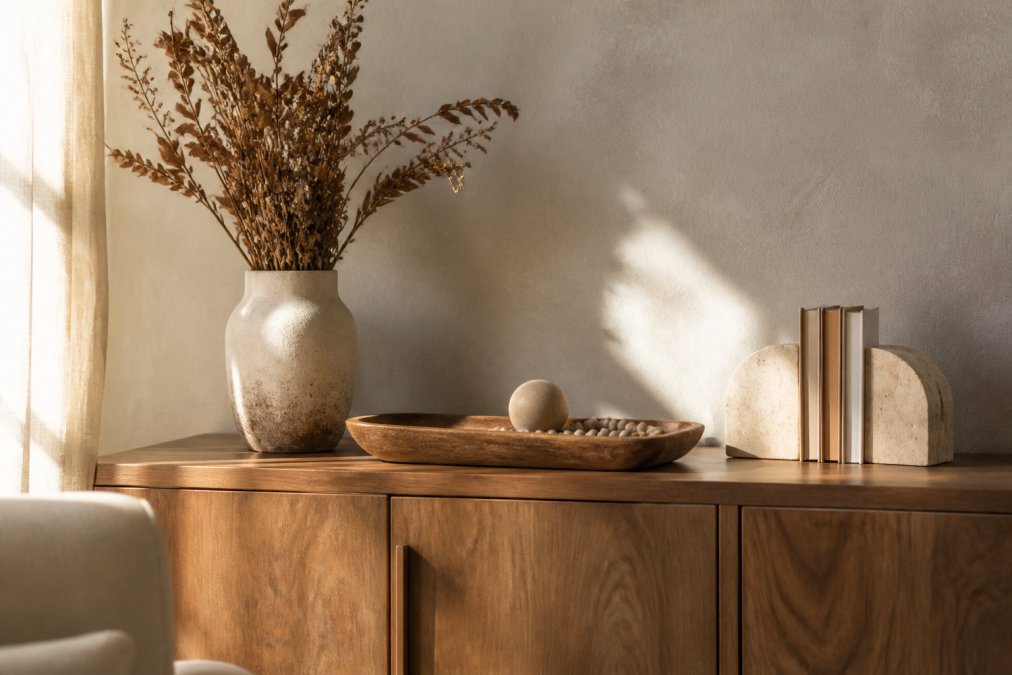
Travertine and natural stone bring architectural interest through their veining and texture. Unlike polished surfaces that feel cold, raw stone has warmth and character. Each piece is unique, slight color variations and natural marks become design features, not flaws. Travertine arch bookends, for example, function as both storage and sculpture. They ground a shelf or console while adding visual weight through their organic form.
Wood surfaces, whether raw, oiled, or finished, introduce warmth that no other material can replicate. Solid acacia or walnut pieces develop patina over time, becoming richer and more beautiful with age. This is the longevity piece: organic modern materials actually improve with use and time, unlike trendy finishes that date quickly.
Textiles matter too. Natural fibers like linen, wool, and cotton have breathable qualities that synthetic materials lack. They drape differently, age differently, feel different. A linen throw or wool area rug adds softness without visual clutter. The texture is what makes the space feel inhabited and intentional.
Sculptural Shapes and Curved Furniture in Organic Modern Design
Straight lines dominated early minimalism, but organic modern rejects that severity. Curved furniture, sculptural bases, and soft edges create visual flow and psychological comfort. This is where form becomes functional, curved shapes aren't just prettier, they make spaces feel less rigid and more human-scaled.
Look for furniture with organic silhouettes: rounded table edges, curved chair backs, sculptural pedestals. An Organic Walnut Coffee Table with a flowing base becomes a centerpiece rather than just a functional surface. The curved form breaks up the rectangular geometry of walls and sofas. Sculptural ceramic vases, curved side tables, and rounded shelving units all contribute to this softer aesthetic.
The principle here is balance. Curved elements need some geometric counterpoint or they become too soft, too undisciplined. Pair a sculptural base with a clean-lined tabletop. Use curved furniture alongside linear shelving. The tension between organic shapes and intentional simplicity is what makes the style work. Without that balance, you drift into maximalism.
How to Style Organic Modern Spaces on Any Budget
You don't need unlimited funds to achieve this aesthetic. The key is prioritizing quality over quantity and understanding which pieces carry the most visual weight.
Start with one statement piece, ideally something with sculptural form or exceptional material. This becomes your anchor. An Organic Walnut Coffee Table or a set of Travertine Arch Bookends immediately signals the design direction. One exceptional piece costs less than filling a room with mediocre items and creates more impact.

Build around that anchor with functional basics: a neutral sofa, simple shelving, basic lighting. These don't need to be expensive, they just need to be clean-lined and unobtrusive. They provide the calm foundation that lets your statement pieces breathe.
Add texture through textiles and smaller objects. A wool area rug, linen throw, ceramic vase, and wooden tray cost far less than furniture but completely transform a space. These items are where personality emerges. Layer them thoughtfully, don't fill every surface, but create small vignettes of intentional styling.
The budget-conscious approach to organic modern design actually aligns perfectly with the aesthetic: fewer, better things. Retailers often push the opposite, more items, lower cost each. Resist that. One beautiful ceramic vase matters more than five mediocre ones.
Choosing the Right Organic Modern Living Room Rug
An organic modern living room rug anchors the space and defines the seating area. The right choice dramatically affects how the room feels.
Look for natural fibers, wool, jute, cotton, in neutral tones. Muted grays, warm beiges, and soft charcoals work universally. Avoid bright colors or bold patterns; the rug should ground the space, not compete for attention. Texture matters more than color. A subtle weave, natural pile variation, or hand-knotted appearance adds visual interest without visual noise.
Size is critical. The rug should be large enough that at least the front legs of your seating furniture sit on it. A small rug floating in the middle of the room creates visual fragmentation. A properly sized rug anchors the entire seating arrangement and makes the space feel intentional.
For an organic modern living room rug, consider these qualities: natural fiber, neutral tone, subtle texture, generous size. A Solid Acacia Decorative Tray styled on top of the rug with a ceramic vase and a few books creates a layered, curated look that feels both minimal and warm.

Caring for Raw Materials: Maintenance and Longevity
Raw materials require more attention than their polished counterparts, but this maintenance is part of their appeal. The aging process, the patina development, the evolving character, these are features, not bugs.
Natural stone like travertine needs periodic sealing to resist staining and moisture. Oiled wood surfaces require occasional re-oiling to maintain their luster and protection. Linen and wool textiles benefit from regular vacuuming and occasional professional cleaning. These aren't burdensome tasks, they're part of living with quality materials.
The payoff is longevity. A well-maintained travertine piece or walnut furniture piece improves with age. A linen throw that's been used and washed for years develops a softness and character that new fabric can't match. This is the difference between trendy and timeless: materials that get better with time versus those that wear out.
Budget for maintenance when you invest in organic modern pieces. Factor in occasional sealing, oiling, or professional cleaning. This isn't an expense, it's an investment in keeping your pieces beautiful for decades. The cost per year of ownership drops dramatically when pieces last 20+ years instead of 3-5.
Creating an organic modern interior takes intention, but it doesn't require perfection or unlimited resources. The aesthetic thrives on thoughtful choices, quality materials, and restraint. At Suemasue's Place, our curated collection, from Travertine Arch Bookends to the Organic Walnut Coffee Table to sculptural ceramic vases, is designed specifically to anchor organic modern spaces with pieces that combine refined craftsmanship with natural warmth. Start with one exceptional piece, build slowly, and let your space evolve. The result is a home that feels both contemporary and timeless, sophisticated and genuinely inviting.
Frequently Asked Questions
What defines the organic modern interior design style in 2026?
Organic modern blends natural, raw materials with clean, minimalist forms. It emphasizes biophilic design through raw wood, natural stone, and tactile textures, paired with sculptural furniture and soft edges. The style prioritizes intentional living and curated spaces that feel warm and grounded rather than cold or sterile. It's about creating harmony between nature and modern simplicity.
How do I choose the right organic modern living room rug?
Select rugs in muted, earthy tones like warm beige, soft taupe, or natural gray. Natural fiber rugs in jute, sisal, or wool complement the aesthetic while adding tactile warmth. Look for rugs with subtle texture rather than bold patterns. A solid or minimally patterned rug anchors the space without competing with sculptural furniture and allows other design layers to shine.
What color palettes work best for organic modern homes in 2026?
Organic modern color palettes center on earthy neutrals: warm whites, soft grays, warm beiges, and muted taupes. Layer in deeper tones like soft sage, warm terracotta, or charcoal for architectural interest. The key is restraint, choose 3-4 main colors and let natural materials provide depth through their inherent veining and texture rather than bold accent colors.
How do I avoid a space that feels too matchy-matchy or curated?
Mix pieces intentionally rather than perfectly. Pair statement items like a sculptural coffee table with everyday items you already own. Vary material finishes, combine matte ceramics with glossy wood and rough stone. Leave some shelves and surfaces less styled. The goal is functional beauty that looks lived-in, not showroom-perfect. Organic modern celebrates imperfection and natural variation.